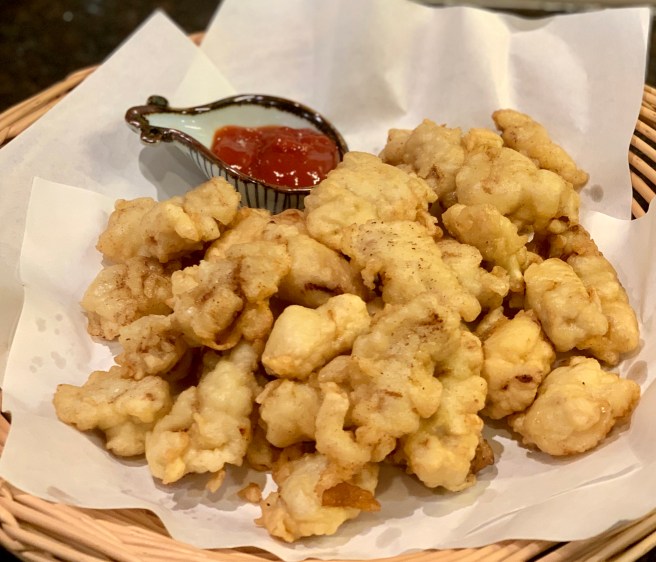
Battered Pork Tenderloin Fries软炸里脊ruǎn zhà lǐ jǐ

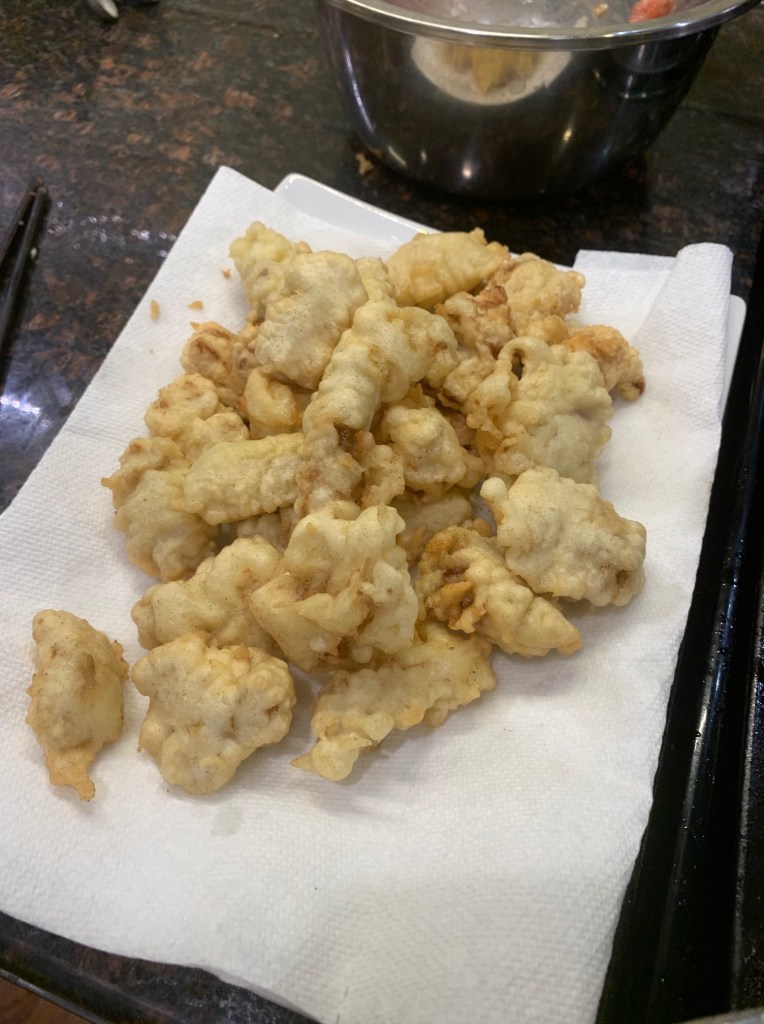
These golden pouches, filled with lightly seasoned pork, have airy, soft and chewy shells and are very juicy on the inside.  I originally intended to make this Beijing-style dish as an appetizer, but after snacking on a couple of them I literally couldn’t stop and before I knew they became an entire meal. So, appetizer or main course, these are apparently good for any level of hunger!

I have tweaked the traditional recipe a bit by adding baking powder into the batter. Baking powder helps create tiny air bubbles on the surface of the battered meat when it is placed in hot oil. The bubbles expand the surface area of the batter, breaking up its thickness, which results in a soft and chewy fried battered pork loin.

This batter also goes well with shrimp, fish fillet and chicken breast.

Serving 4-6

  • 400g                         pork tenderloin/pork loin, cut into 3-cm-long strips
  • 2 cups                         cooking oil for deep fry
  • Ketchup or Tabasco (any spicy sauce) for dipping sauce

Seasoning

  • 2 tablespoons             Chinese cooking wine
  • 1 tablespoon             Maggi seasoning sauce (or simple use light soy sauce)美极鲜或者生抽
  • ½ teaspoon                 salt
  • 1/4 teaspoon               white peppercorn powder白胡椒粉
  • 1 tablespoon              cooking oil

Batter

  • 200g                           all-purpose flour中筋面粉
  • 2 medium-size eggs
  • 1 teaspoon                  salt
  • 1 teaspoon                  baking powder泡打粉
  • 220g                           water

Method

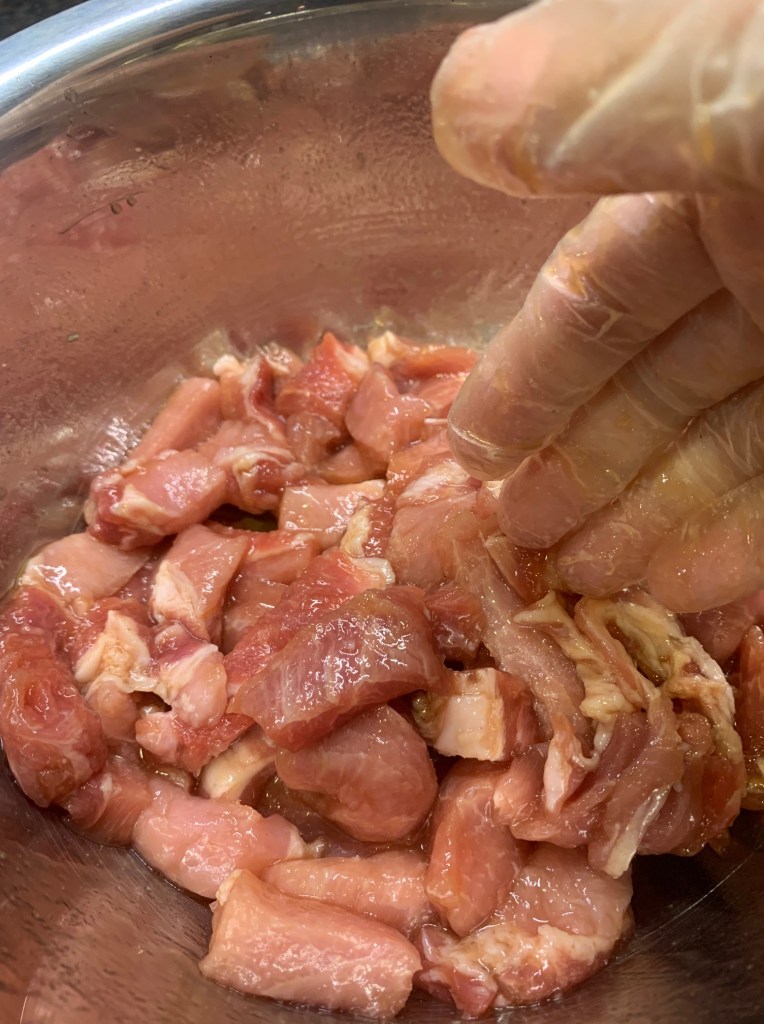
  1. Clean the pork, cut into long strips and put in to a mixing bowl. Add all the seasoning ingredients except 1 tablespoon of cooking oil.  Use your hand to ‘massage’ all the pork strips to ensure seasonings are well absorbed. Toss in 1 tablespoon of cooking oil. Mix well.  If done properly, you will not see any liquid left on the bottom of your mixing bowl. Marinate for 20 minutes.

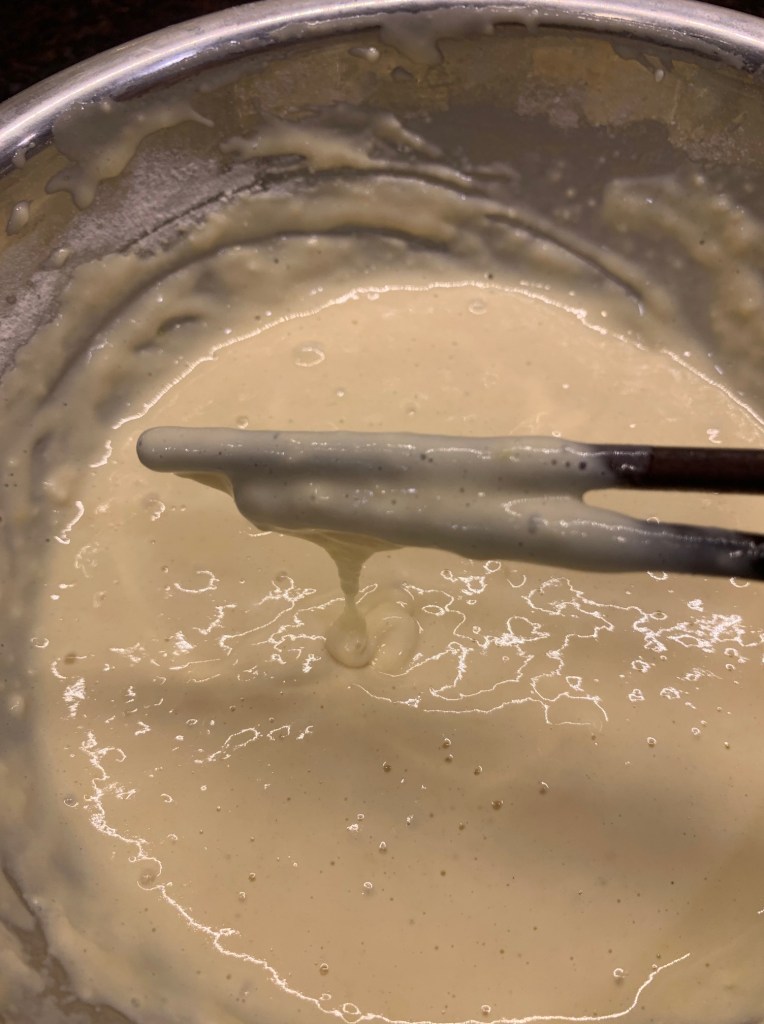
2. In the meantime, let’s make the batter. Place flour in a mixing bowl. Place into the rest of the ingredients except water. Adding water gradually while using chopsticks to stir and mix. Stir in one direction till smooth and no dry flour in the bowl. The batter should be able to thinly hang on the chopsticks.

3. Heat the two cups of cooking oil to about 320°F/160°C.

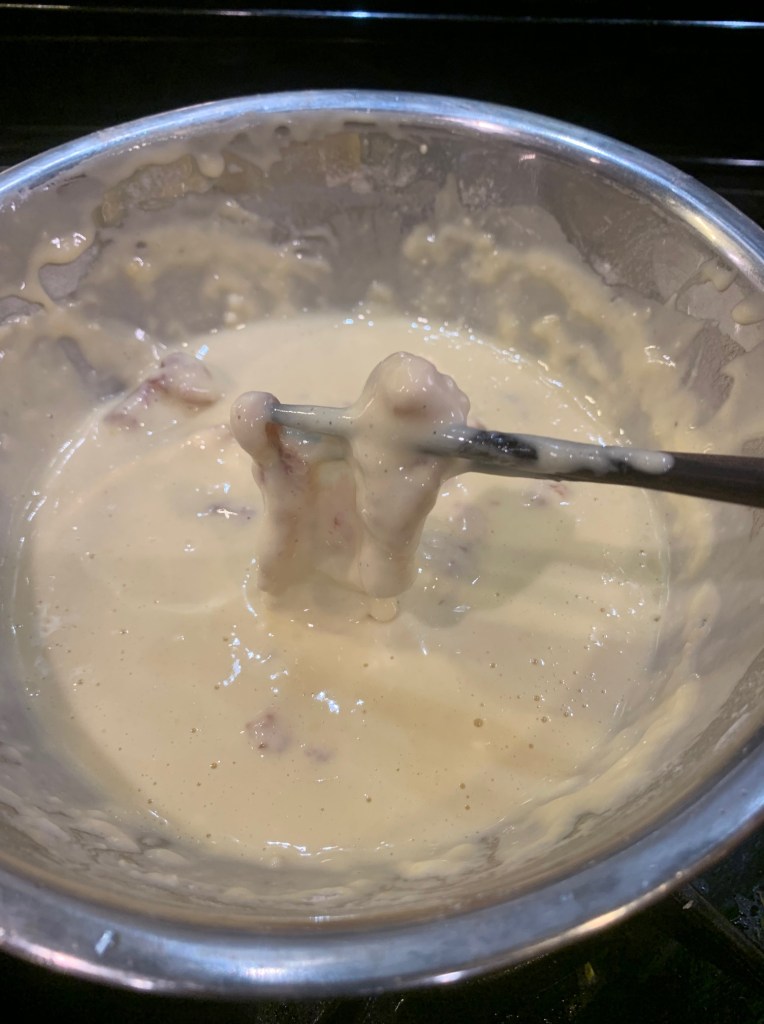
4. Dip the pork strips in the batter in small batches. Make sure the pork strips are well coated with batter. Slide the pork strips into the cooking oil. Fry for around 3 to 4 minutes over medium fire until slightly browned. Transfer out in a kitchen towel-lined plate. Remove the burned batter bits from the oil pot before cooking a new batch of battered pork loin.
5. If you prefer a crispier shell, you can quickly deep fry the cooked pork strips again. Simply reheat the oil to 200°C/400°F (almost smoky), place the pork strips in. Quickly fry for 20 to 30 seconds until golden brown. Transfer out.

6. Serve hot.

Wonton Wrappers馄饨皮hún tún pí

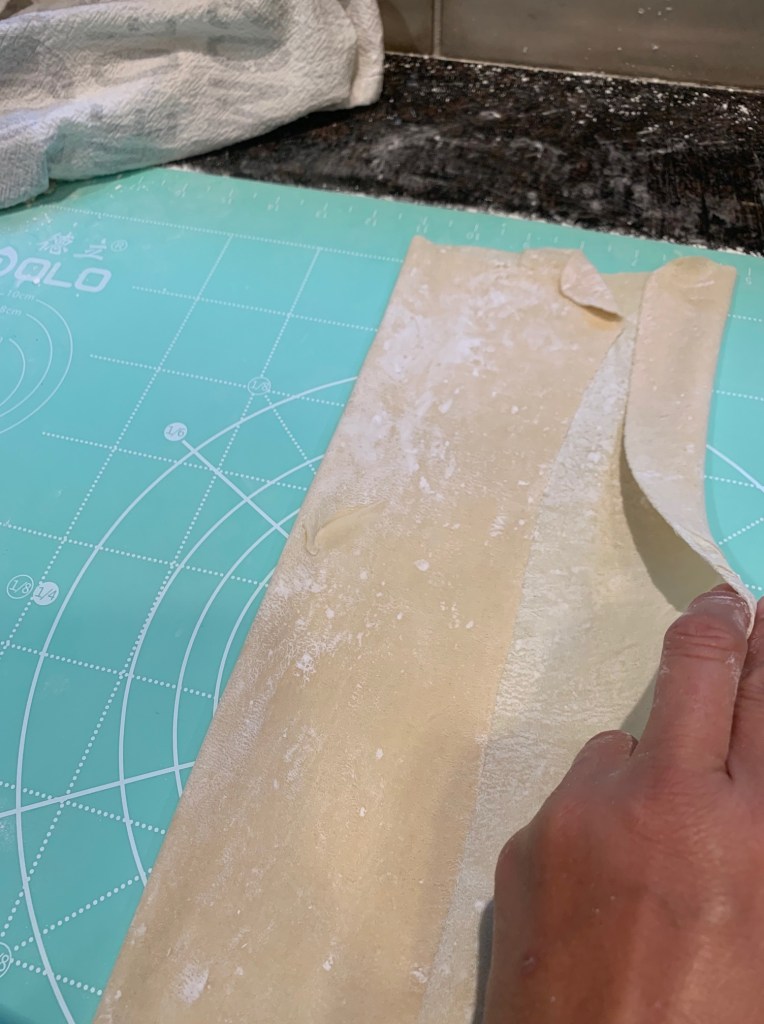
Preparing wonton wrappers from scratch is not as difficult as you would think. Although a stand mixer or noodle machine may help, you can certainly make these paper-thin wrappers just by your hands. The trick is to ensure enough kneading and rest time to help the gluten relax so to make rolling out the dough easier. Once having tasted these fresh homemade versions, you will likely not want to use those store-bought wrappers anymore. Click Shanghai Pork and Vegetable Wontons for how to wrap wontons.

Yields about 40 to 50 wrappers  

  • 400g           all-purpose flour pr plain flour 中筋面粉
  • ¼ teaspoon    salt
  • 1 medium-size  egg
  • 140g          water in room temperature (You can use 180g of water if you prefer egg-free wrappers)
  • 100g                     corn starch

Method

  1.  In a large bowl, mix flour with salt and then add egg in. Stir well.

2. You should expect a very hard dough. So SLOWLY add water and keep stirring the mixture – this step is critical when dealing with a hard dough. Gradually adding water allows water is even absorbed by the flour so as to avoid a big flour lump while there is still a lot of dry flour left in the bowl.  This step takes about 3 to 4 minutes.

3.Now use your both hands to form a ball. You may adjust the amount of water a little bit based on the water absorbing capacity of your brand of flour. Stop adding water when there is no dry flour in your bowl. Again, you should expect a very hard dough.

4. Cover the dough with plastic wrap (or simple flip the mixing bowl) on the working surface and rest for 15 minutes.

5. Knead the dough again for about 5 to 6 minutes until smooth. Cover. Rest for around 30 minutes.

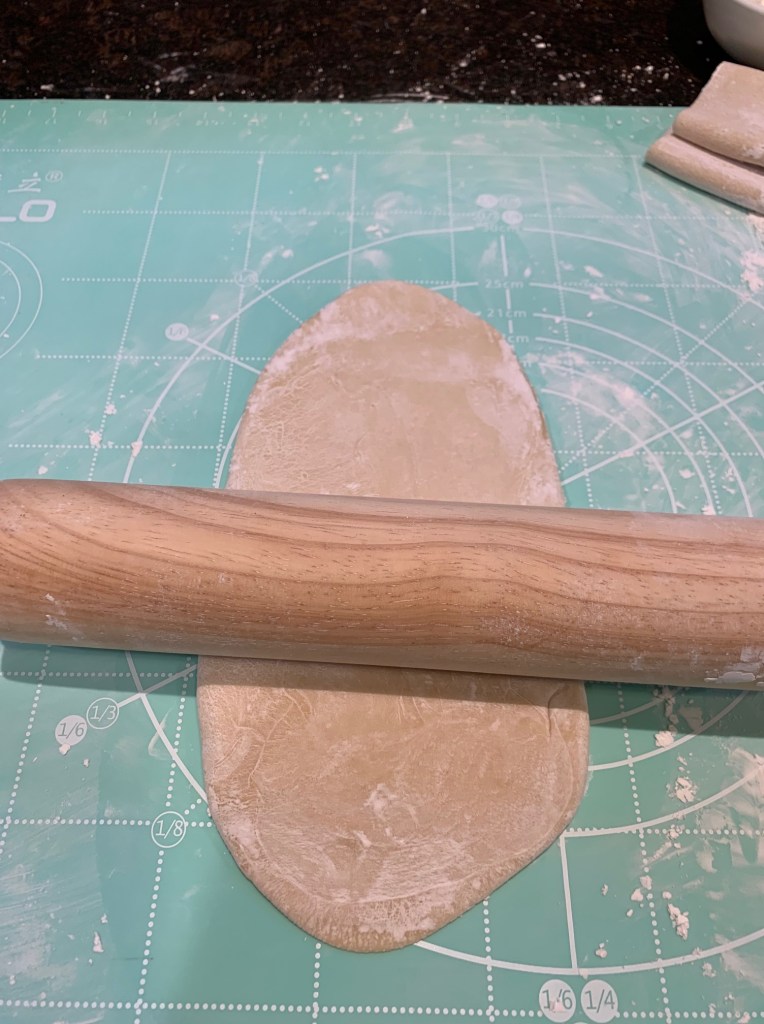
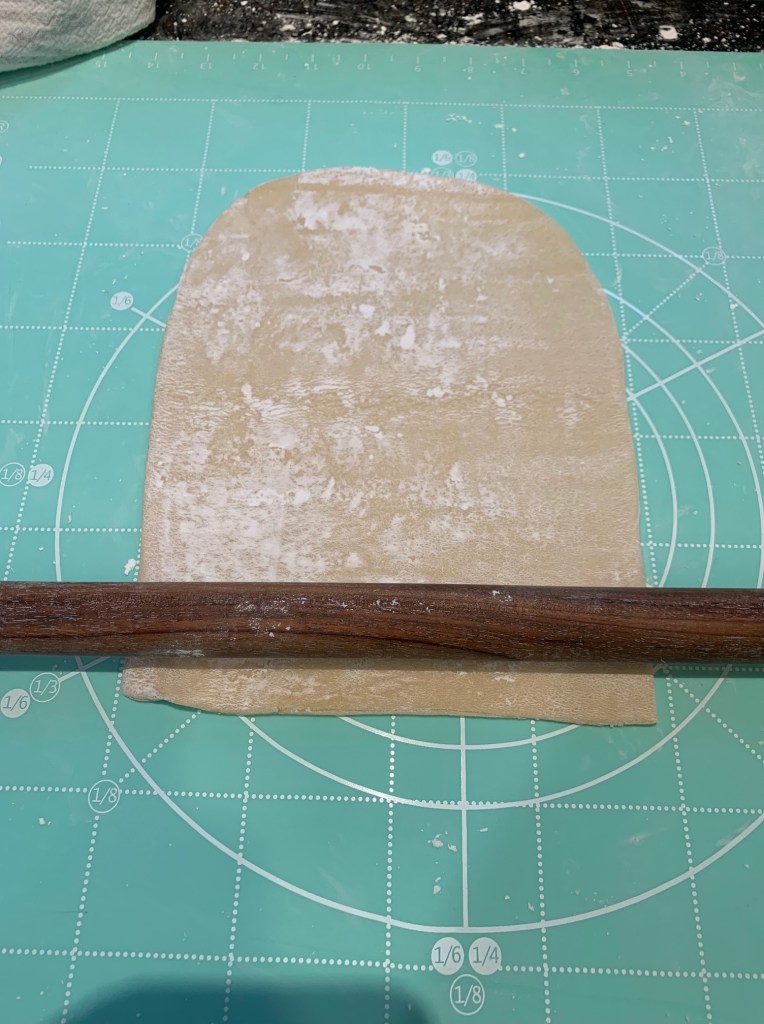
6. Divide the dough in half. Press on half down and roll out to a larger wrapper around 3mm in thickness. Heavily dust the working surface and the wrapper piece while rolling out.  Fold up the wrapper piece and cover with plastic or kitchen towel again for the next resting process. Finish the other half and rest both for another 45 to 60 minutes.
7. Take one of the two wrapper pieces out and divide it in half.

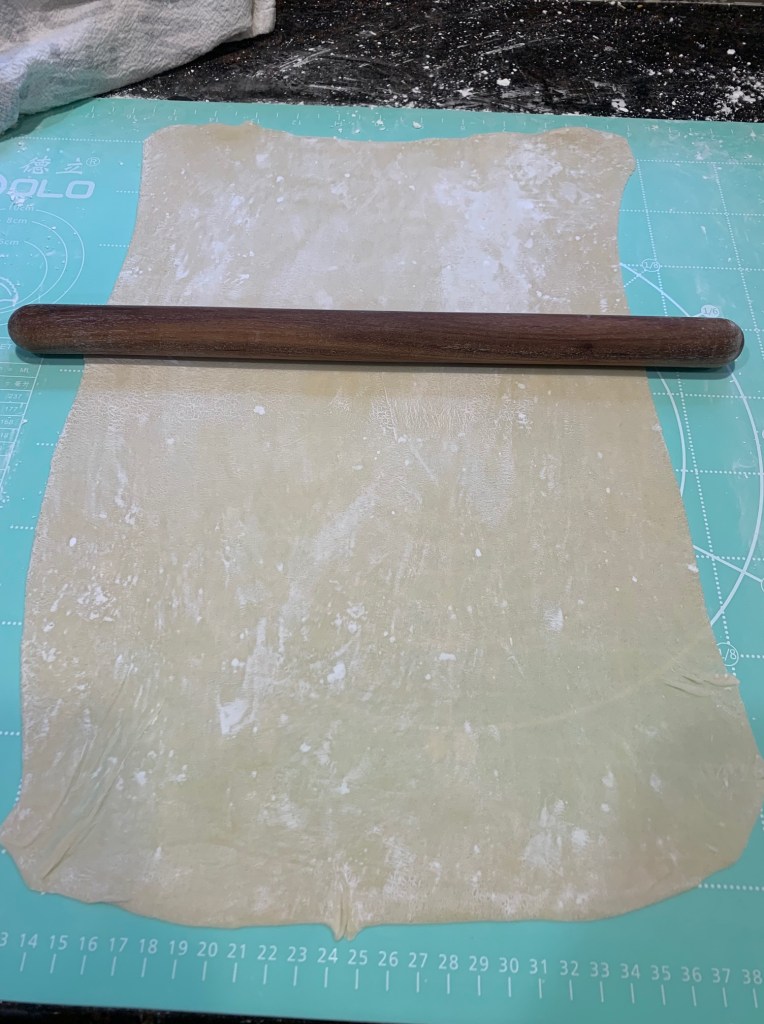
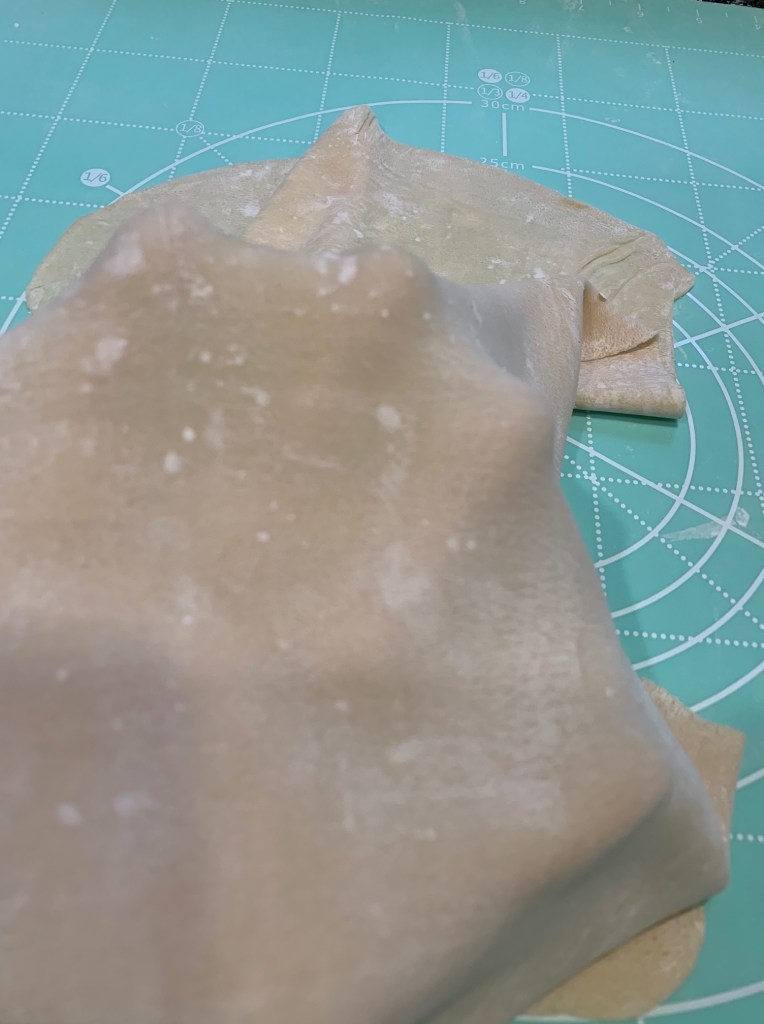
8. Roll each of the halves into paper-thin wrapper or as thin as you possible. Keep dusting. Then cut the large wrappers into small squares around 8cm.

9. Repeat and finish all. There will be some dough trims left on your working surface. Keep them and place them in fridge. They are perfect for making a small bowl of homemade noodle soup for your breakfast  next morning.

Tips:

  1. Dust the wrappers and then place them in a plastic bag; they can be store for a couple of days in fridge.
  2. Yes, you can surely use stand mixer or bread-maker to knead the dough and use noodle machine to flatten the dough (for step 6).

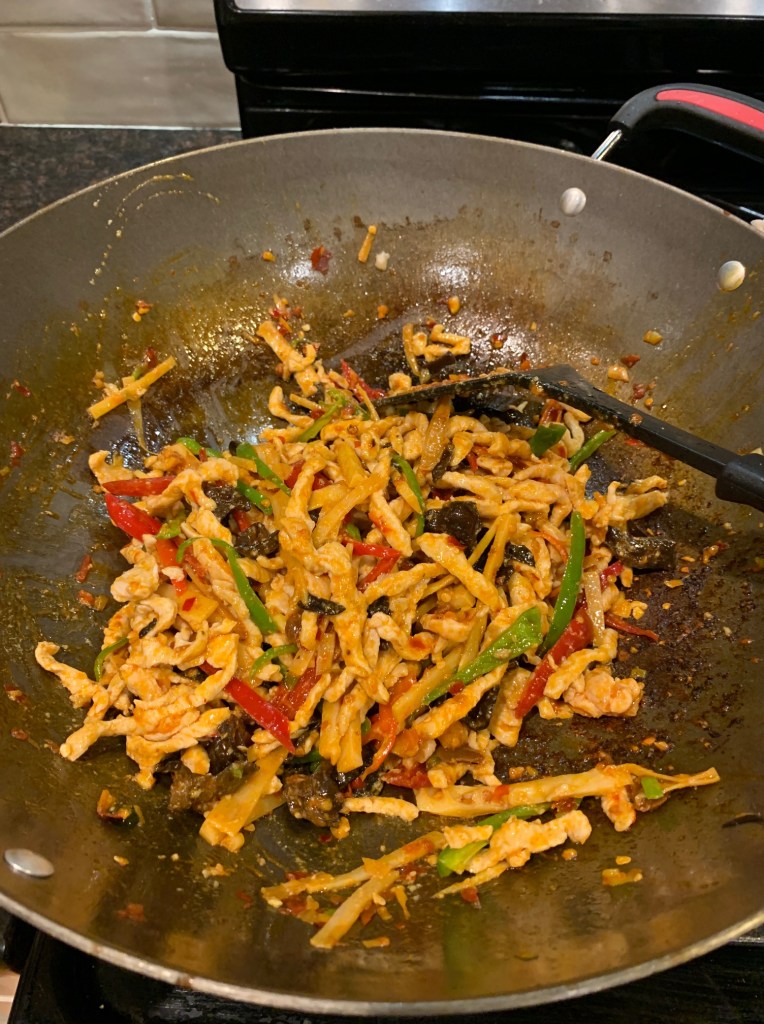
Fish-fragrant Shredded Pork鱼香肉丝yú xiāng ròu sī

The sauce for this classic Sichuan dish is called “yuxiang” in Chinese, which literally means ‘fish aroma’ . But do not be fooled by the name – there is no fish involved in the recipe at all. Most of the cookbooks say that it got this name because it’s often used when cooking fish, which it is not a bad explanation. But I’ve found that the traditional recipe for yuxiang included chilies fermented with crucian carp, which gave the sauce a deep, anchovy-like flavor; hence perhaps, the name.

I emphasize using pickled chilies, which can be easily prepared at home (click here for recipe) or purchase it in the Asian market. They have a purity of flavor that is hard to beat.

Serves 3-4,

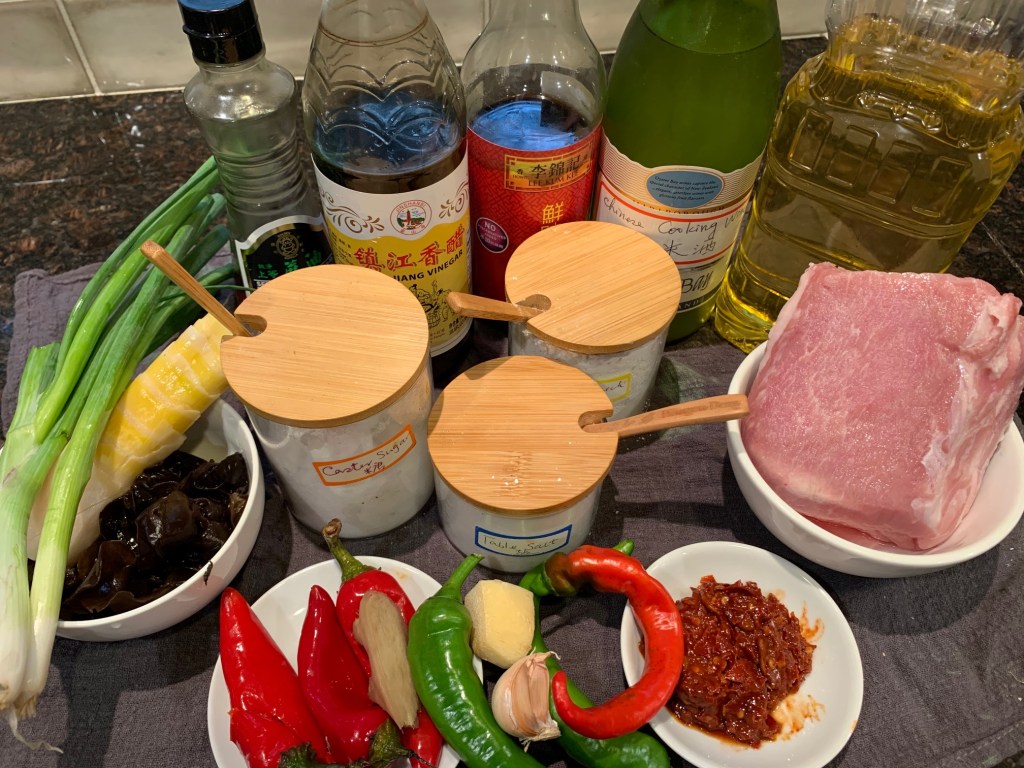
  • 2 tablespoons                                    dried ear mushrooms (after rehydration)水发后的黑木耳, roughly chopped
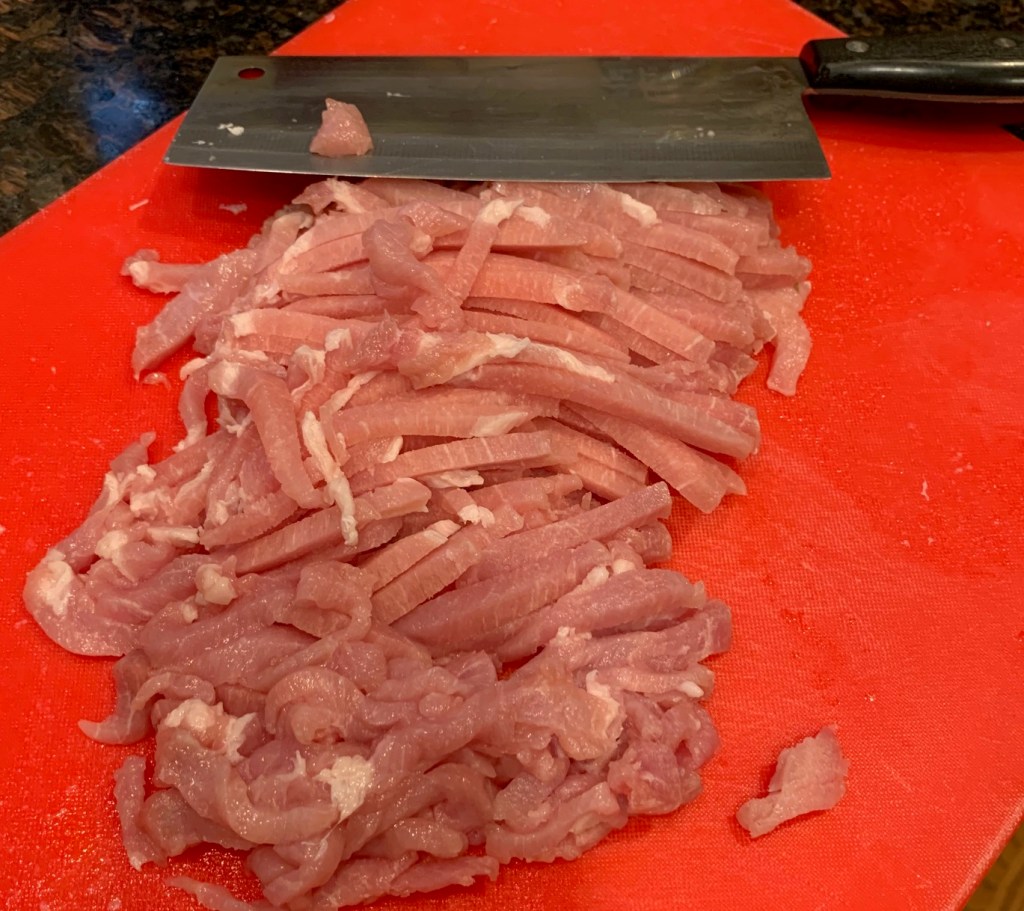
  • 450g/1 pound                                   pork tenderloin, shredded/thinly sliced猪里脊肉切丝
  • 3 +2 tablespoons                              cooking oil
  • 1 tablespoon                                      Sichuan fermented bean paste豆瓣酱
  • 3 to 4 medium-size pickled peppers and 1 inch of pickled ginger, or replace pickled pepper and ginger with fresh long red peppers, 泡椒/姜 (click here for homemade recipe)
  • 2 garlic cloves, minced
  • 2 spring onions (white parts only), minced. Save minced green for garnishing
  • 1 inch, ginger, minced
  • 1 fresh red pepper                           thinly sliced
  • 2 fresh green peppers    thinly sliced
  • 1 piece                                                  Bamboo shoots, sliced (optional)

Marinade Sauce

  • 1 tablespoon                      corn flour生粉
  • 1/2 teaspoon                     salt
  • 1 tablespoon                      Chinese cooking wine 

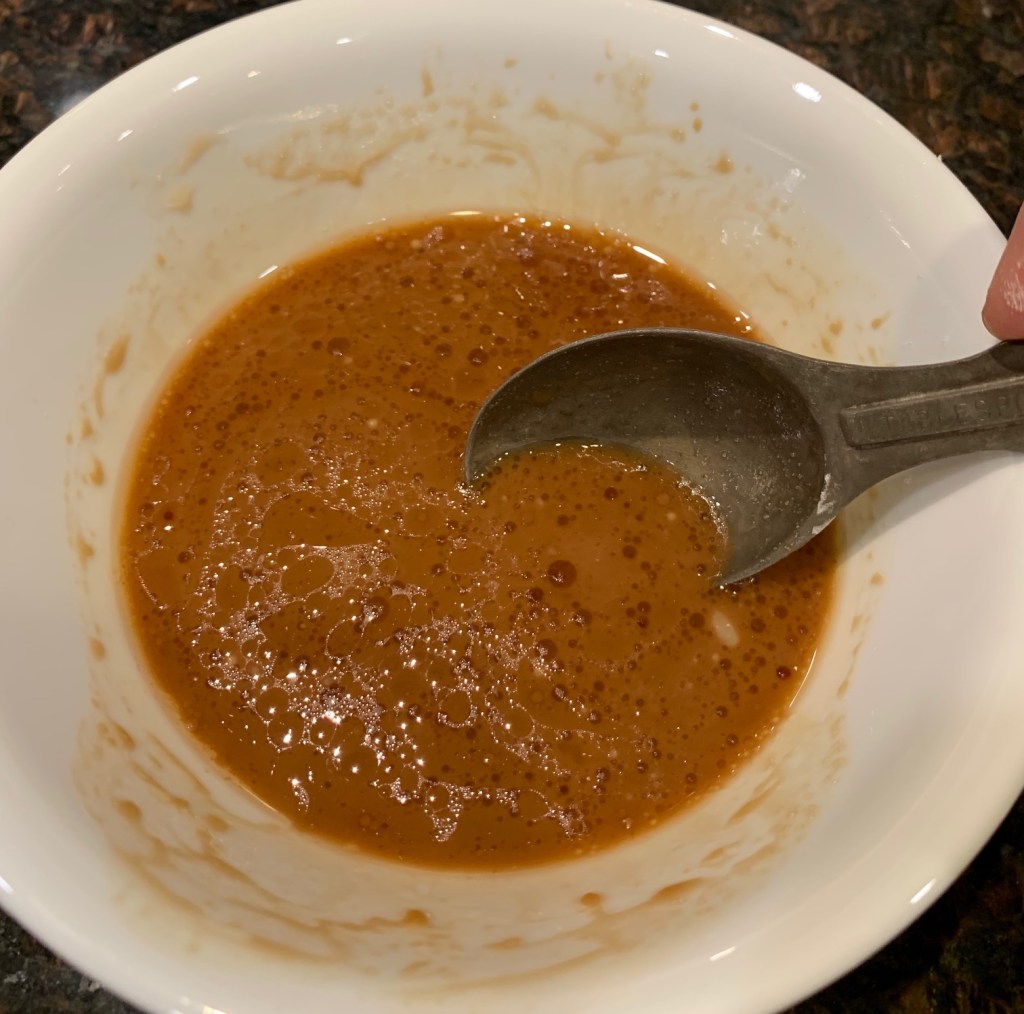
Seasoning sauce

  • 1 tablespoon                       corn生粉 flour
  • 1 and half tablespoons      caster sugar白糖
  • 1 and half tablespoons     Chinkiang vinegar镇江香醋
  • 1 tablespoon                        light soy sauce生抽
  • 2 tablespoons                      Chinese cooking wine
  • 1 teaspoon                            sesame oil

Method

  1. If you use dried ear mushroom, please soak the dried ear mushrooms with clean water for 20 minutes.

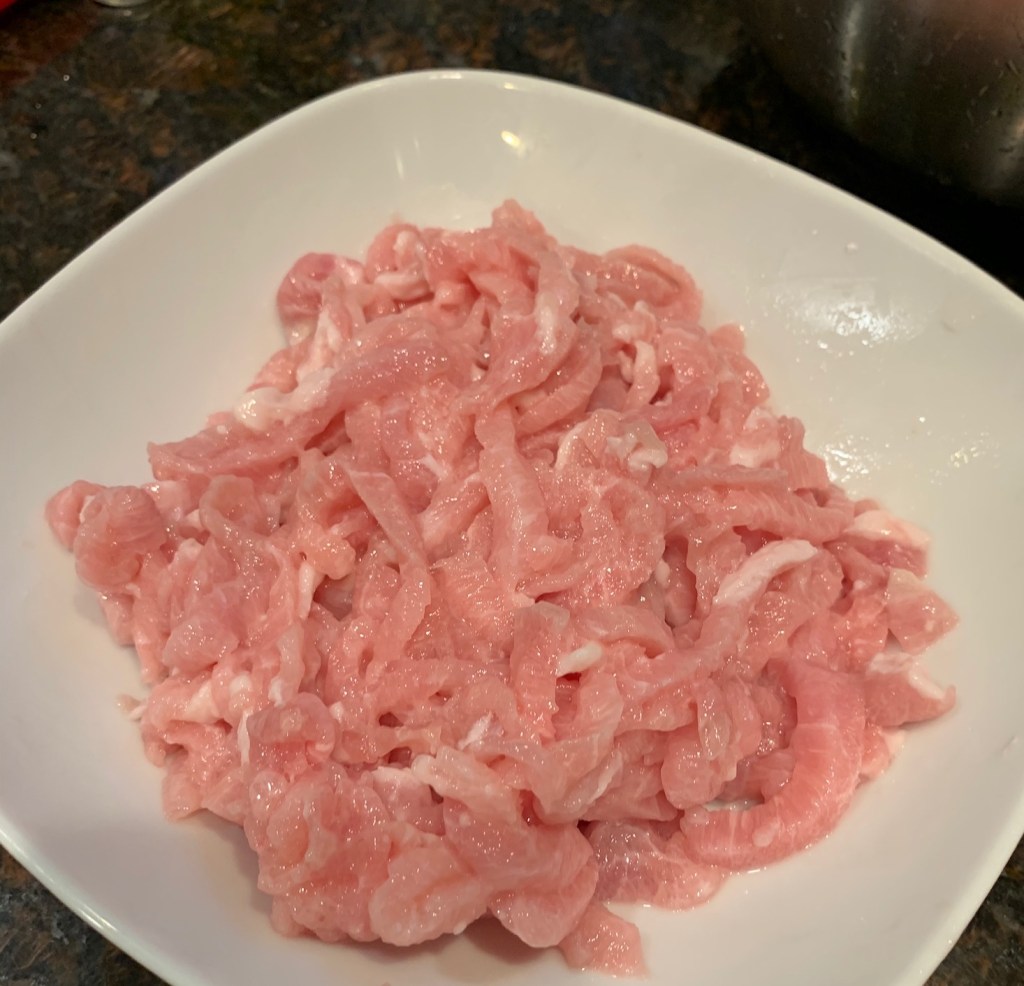
2. Shred the pork tenderloin and then marinade with salt, cooking wine and scorn flour. Mix well and set aside.

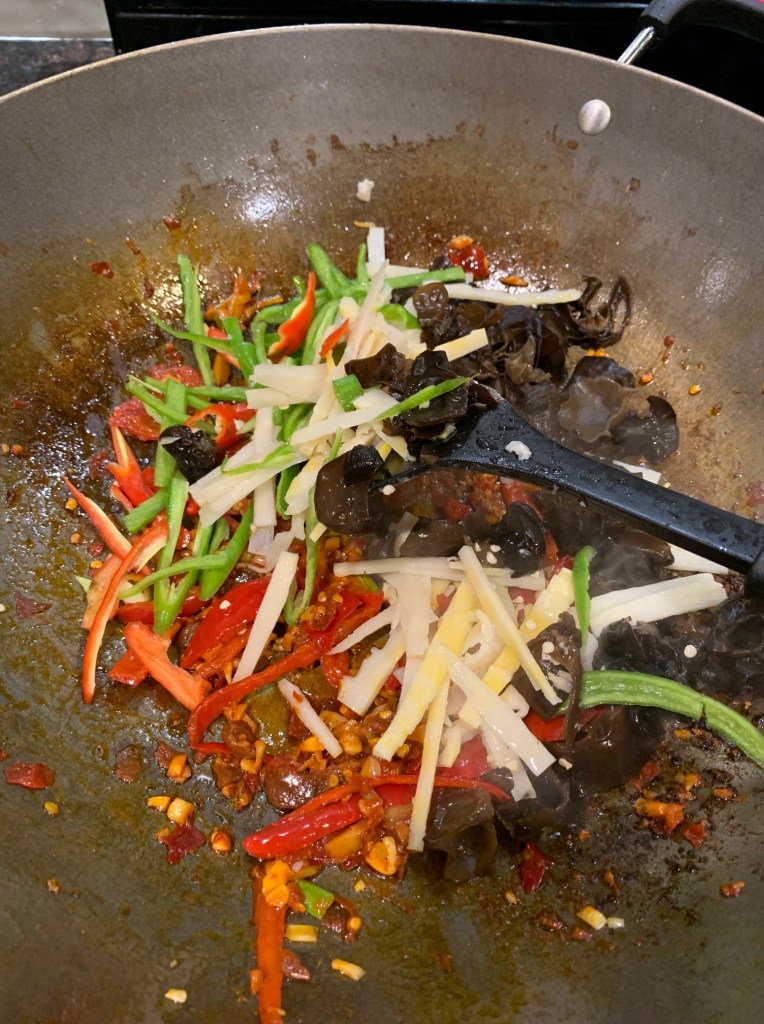
3. Shred the black ear mushrooms, peppers and bamboo shoots into in similar sizes.

4. Prepare another bowl, add all the ingredients for seasoning sauce; mix well and set aside.

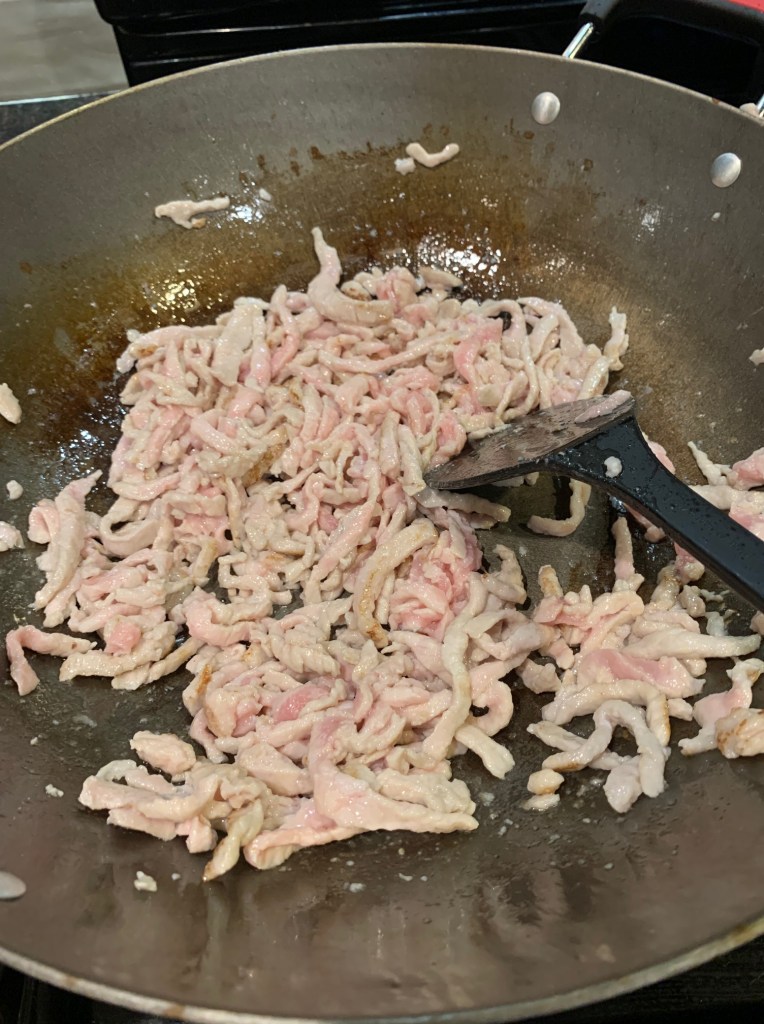
5. Heat up 3 tablespoons of oil in a wok; add shredded pork to stir-fry until the pork become white from pink. Move shredded pork out of the wok.

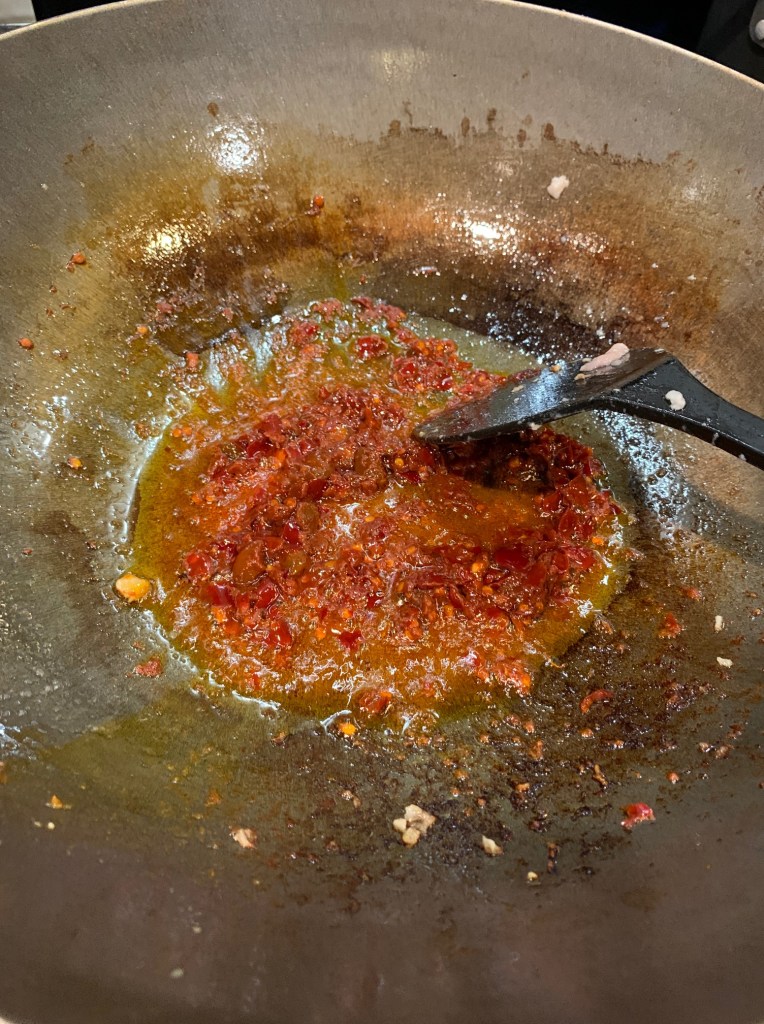
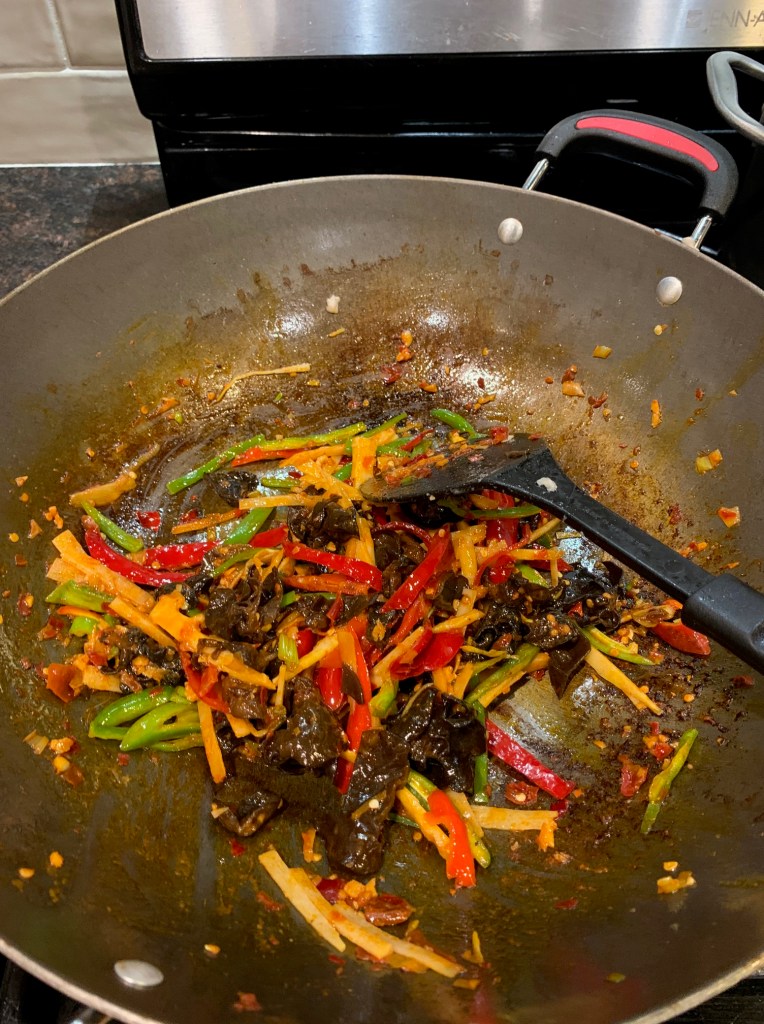
6. Place 2 tablespoons of oil in wok; add 1 tablespoon of fermented bean paste. Fry for 2 minutes till aromatic. Add into sliced pickled ginger and fry for 1 minute. Add garlic, ginger and green onion (white part) to stir fry for the aroma. Add into sliced peppers bamboo shoots and ear mushrooms; and return the pork shreds.

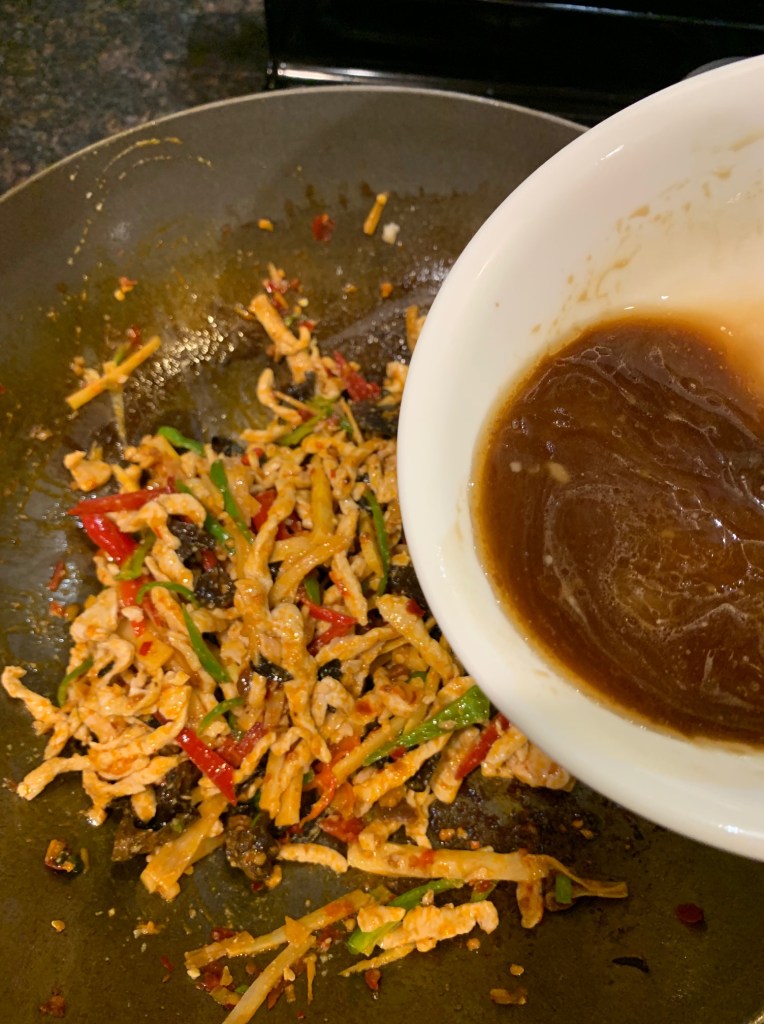
7. Add seasoning sauce and do some stir-fry until the sauce is evenly coated on the ingredients.

8. Move out from the wok and garnish some green part of the spring onions.

9. Enjoy the dish with a bowl of hot white rice.

Tips

Since doubanjiang (fermented bean paste), pickled peppers and soy sauce contain salt. So you may need just a little or none of the salt at all in this recipe.

Pickled Red Chili Pepper 四川泡椒sì chuān pào jiāo

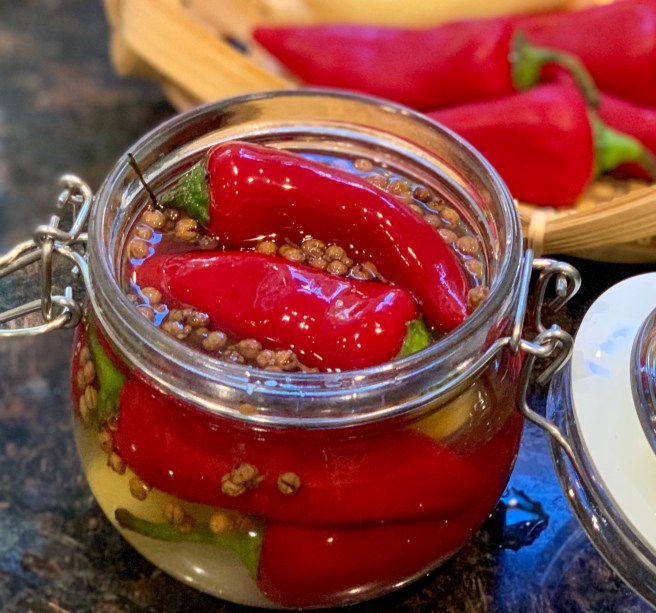
When you have a jar of pickled chilies made from truly fresh ingredients, the taste is a couple of thousand times more wonderful than anything a commercial producer can make. The canning process is easy and straightforward. To make the recipe work, always sterilize your canning jars and lids and remember laying one layer of peppers, then salt and Sichuan peppercorns. It is an indispensable ingredient for an authentic Fish Fragrant Shredded Pork, a classic Sichuan Cuisine dish.

Ingredients

  • 900g                                       water, tap water is perfectly fine
  • 450g                                       red chili pepper, serrano chilies or Thai bird chilies, or any red hot chilies available to you
  • 250g                                       ginger, peeled and cut into big slices
  • 250g                                       salt
  • 1.5 tablespoons                 Sichuan peppercorns花椒

Method

  • Clean and sterilize canning jars and lids. Drain.
  • Peel the ginger, rinse the red chili pepper and drain. Again, use clean kitchen towel to pat them dry.  
  • Bring the 900g water to a boil. Make sure your pot is clean when boiling the water. Once water is boiled, turn off the heat and leave the water to cool down to the room temperature.
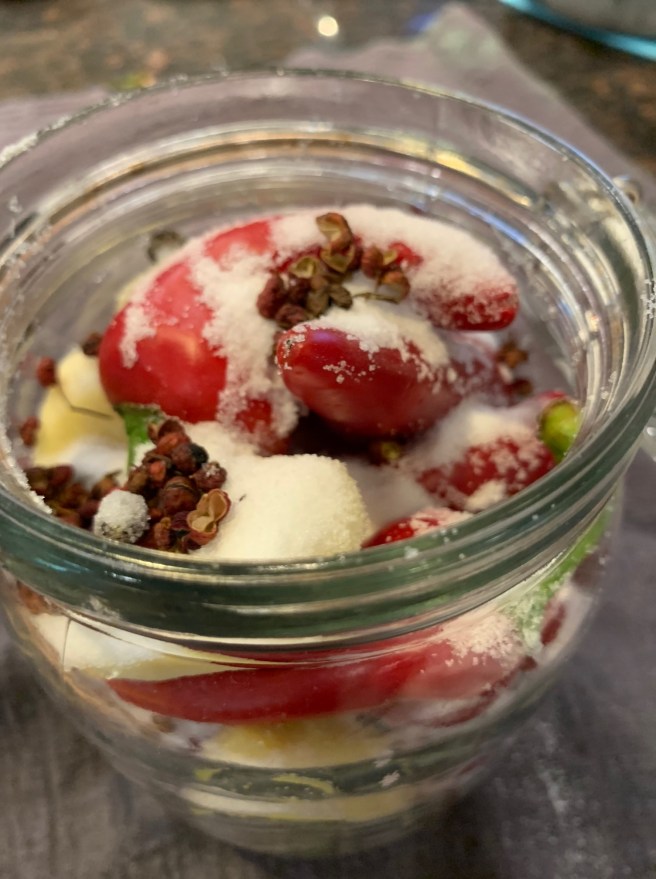
  • Get 1 canning jar, place one layer of red chili pepper and ginger, followed by another one layer of salt. Then sprinkle some Sichuan peppercorns on top of the salt. Repeat the process until all ingredients are used up. Pour the cooled water to the pickle jar. All your ingredients should be soaked in the water. Cover the lid.
  • Place the jar in a cool environment. You can start enjoy the pickled peppers and ginger in 7 days later. Do remember to use clean utensils whenever you take some pickled peppers and gingers out of the jar.
  • Do keep the liquid in the jar. This is the ‘mother’ pickling juice in which you can throw more vegetables (red peppers, cabbage, green beans, radishes, daikon) for your next batch of pickled vegetable.