Wild Rice Stem with Soy Sauce油焖茭白yóu mèn jiāo bái

cover1 (2).JPGWild Rice Stem, or Water Bamboo, is a unique and extraordinary Chinese vegetable. It has the fresh delicacy of bamboo shoots but a softer texture. The plant is widely cultivated in the wetland in the middle and lower reaches of the Yangtze River and believed to grow in Vietnam as well. Wid Rice Stem is particularly delicious cooked in this Shanghainese way, with soy sauce and hints of sugar sweetness and sesame oil.

Serves 3-4

  • 400g                          fresh wild rice stem新鲜茭白
  • 2 tablespoons          cooking oil
  • 1 tablespoon           Chinese cooking wine料酒
  • 1 tablespoon            light soy sauce生抽
  • 1 tablespoon           dark soy sauce老抽
  • 1 tablespoon            caster sugar白砂糖
  • 1/3 cup (75Ml)          water or stock水或者高汤
  • ½ teaspoon               sesame oil香油
  • ¼ teaspoon or to taste      Salt

Method

  1. Strip off any remaining layers of husk from the wild rice stem, so that you are left with the crisp, pale and ivory-colored stems (the peeled weight will be about 300g). Start from the tips, roll-cut the stems evenly into bite-sized pieces: holding your knife at an angle, cut off a chunk, the rotate the stem a half-turn towards you and, holding your knife at the same angle, cut off another chunk. Repeat the turning and cutting for the rest of the stem.


  1. Heat the oil in s seasoned wok over a high flame. Add the chopped stems and stir-fry for 2-3 minutes until tinged with gold. Add the cooking wine, light soy sauce, dark soy sauce, sugar, water and season with a bit salt and mix well. Bring to the boil, then simmer over medium heat for 3-4 minutes to allow the vegetable to absorb the flavors of the sauce. Turn up the heat and reduce the sauce until syrupy, stirring constantly to avoid the bottom of the wok sticking. Turn off the heat, stir in sesame oil and serve.

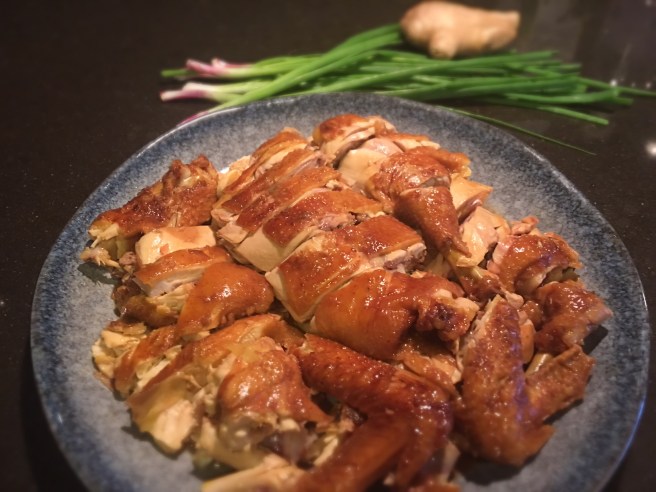
Soy Sauce Chicken 豉油鸡chǐ yóu jī

cover 3.JPGThe humble Cantonese dish, served in a Singapore Hawker Center, was awarded a much coveted Michelin star in 2017. It is actually quite simple to make it at your home kitchen. Superior soy sauce is obviously the key. However, the process of caramelizing sugar is equally important – it makes the chicken nicely glazed and adds into a sweet and smoky flavour to the tender, springy yet juicy meat.
Serve 2-4

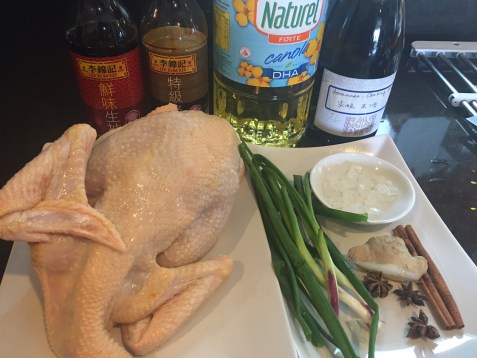
  • I whole chicken, 1.3 kg or 3 to 4 chicken leg quarters if you do not have a big deep pot to hold a whole chicken
  • 2 tablespoons                       cooking oil
  • 25g                                          Rock sugar冰糖
  • 30g (3-4 sprigs)                    spring onions香葱, crushed and tie into knots
  • 20g                                         ginger (crushed to loosen the fiber)生姜
  • 3 star anise      八角
  • 2 cinnamon stick (about 2-inch length) 桂皮
  • 2 tablespoons                      Chinese cooking wine. Either Shaoxing wine or Chinese Rose wine is fine.
  • 3 tablespoons                       light soy sauce生抽
  • 3 tablespoons                       dark soy sauce老抽
  • 500ml, water

Ginger and Spring Onion dip sauce:

  • 10g    ginger, skim removed and minced
  • 1 spring onion, minced
  • 2 tablespoons, cooking oil
  • ½ teaspoon, salt
  • 1/2 teaspoon, sesame oil (optional)IMG_9173.JPG

 Method:

  1. Use a Chinese cleaver to smash the spring onions and ginger to loosen the fibres. Tie the spring onions into knots (this makes it easier later when you remove it from the cooked chicken out of pot.)
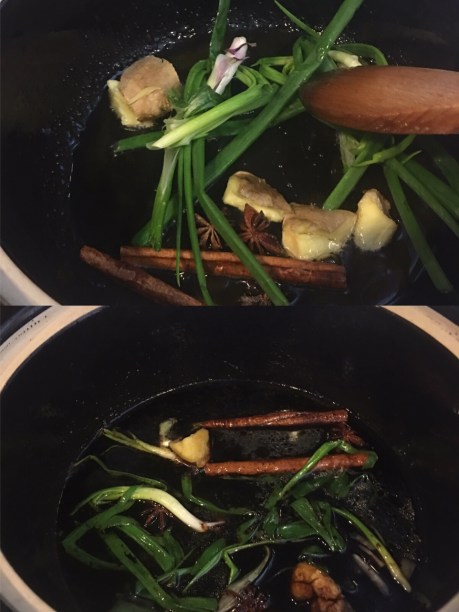
  2. Now let’s caramelize the rock sugar. There are two most distinguishing flavours in the soy sauce chicken. And caramel is one of them. Caramelizing the sugar helps infuse a sweet and a hint of smoky flavour to the dish and brown (add color to) the chicken. Just start with adding rock sugar to cold oil. Cook slowly over low-medium heat until the sugar melts and turns golden. It’s important to get a hot oil temperature without burning the sugar.IMG_9219.JPG
  3. Place start anise, cinnamon stalk, ginger and spring onions and fry for 1-2 minutes. Add cooking wine, light soy sauce, dark sauce and water. Mix well. Turn off the heat.IMG_9220.JPG
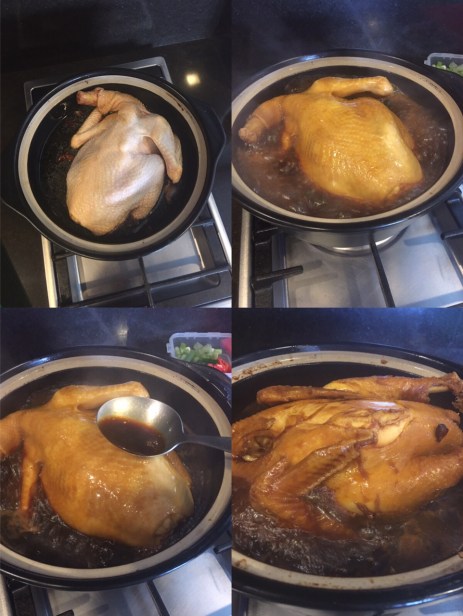
  4. Plunge the chicken into the pot. Leave it soak in the pot for about 30 minutes. Flip the chicken a couple times so the entire chicken is evenly soaked with liquid.
  5. Bring the pot to a boil, then cook the chicken over a medium heat for 30 minutes without covered (no lid). Flip the chicken a couple of times to ensure the bird is evenly cooked. Use a spoon to spray some liquid onto exposed surface of the chicken from time to time. Turn the heat off. Leave the chicken soak in the liquid for at least 30 minutes. Drain. Cut the chicken into bite-size pieces. It is ready to serve. Soy sauce chicken is usually served cold or at room temperature. Do not dump the sauce left in the pot. You can keep it in the fridge or freezer to reuse it for you next soy sauce chicken.IMG_9221.JPG
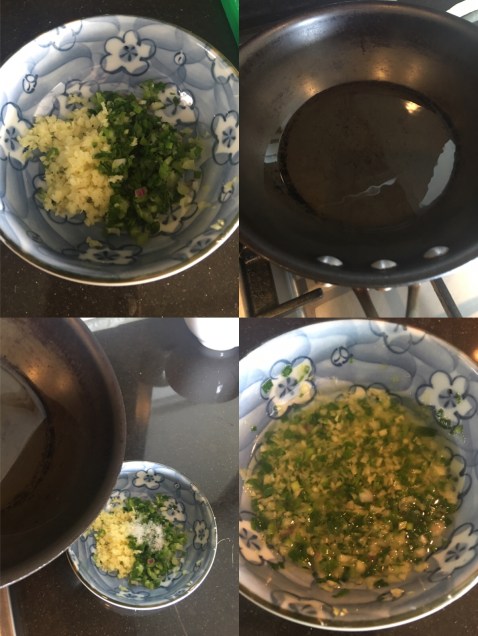
  6. In the meantime, prepare the ginger and spring onion dip sauce, place minced ginger, spring onion, salt, and into a small bowl. Heat up 2 tablespoons of oil in a wok until it starts to smoke. Pour the oil into the small bowl and blend well. Set aside.dipping sauce.JPG


Shanghai Potsticker Buns 生煎馒头shēng jiān mán tóu

letsplaydough's avatar

main image 1The most popular street snack in Shanghai. These golden-bottomed buns, known as Sheng Jian Man Tou in Chinese, meaning pan-fried directly without steaming, are the heftier yet equally irresistible big brother of Shanghai Xiao Long Bao.

Yields about 20 Buns,

Wrappers

  • 300g          plain flour 中筋面粉
  • 1 tablespoon       yeast酵母
  • 1 teaspoon     baking powder泡打粉
  • 150g          water in room temperature
  • 1 teaspoon                       black or white sesame seeds芝麻, toasted
  • 3-4 tablespoons    minced spring onions (green parts only)葱花

Filling

  • 300g           ground pork
  • 3 tablespoons    water in room temperature
  • 100g           pork jelly 肉皮冻 (click here for recipe), chopped
  • 1 tablespoon    cooking oil
  • 1 tablespoon    ginger (minced) 姜末
  • 30g or 2-3 tablespoons   spring onions (minced) 香葱末
  • 1 teaspoon      salt
  • 1 and 1/2 tablespoons    light soy sauce 生抽
  • 1 tablespoon     Chinese cooking wine料酒
  • 2 teaspoons      caster sugar 白糖
  • 1 teaspoon     sesame oil 香油
  • 1/3 teaspoon    white pepper 白胡椒粉

Dipping Sauce

  • 2 tablespoon   Chinkiang vinegar 镇江香醋

View original post 493 more words

Wood Ear Mushroom Salad捞汁黑木耳lāo zhī hēi mù ěr

coverA simple, refreshing and healthy cold appetizer. The wood ear mushroom is called black fungus in English and mu er (木耳) in Chinese – a must-have item in the Chinese pantry because of its super long shelf life, unique texture of crunchiness after cooked and magically making every dish taste better. It is also long acclaimed as a superfood that will cleanse your body by removing toxins from the digestive tract。

The vinegar dressing, highlighted by two different types of rice-based Chinese vinegar, can be made in large quantity in advance and store in fridge for up to two months. And you can mix and match to use any vegetables of your choice.

Serves 4-6

 Vinegar dressing

  • 4 sprigs               spring onions, roughly chopped,香葱切丝
  • 3 tablespoons    Cooking oil
  • 2 tablespoons    Chinese white rice vinegar 白米醋
  • 2 tablespoons    Chinkiang vinegar镇江香醋
  • 2 teaspoons         Sesame oil 香油
  • 1/2 teaspoon       table salt
  • 1 tablespoon      light soy sauce 生抽
  • 2 teaspoons       caster sugar白糖


  • 150g           Rehydrated Wood Ear Mushroom (You will need about 25 gram dried Wood Ear Mushroom in water) 黑木耳 (水发后)
  • 1-2            Fresh green pepper, thinly sliced
  • 2-3            Shallots, thinly sliced
  • 2-3            Thai bird chili or any small red chili, thinly sliced
  • 1-2 sprigs      coriander (optional)
  • 250ML        drinking water

Method

  1. Soak the dry wood ear mushrooms in warm water until hydrated. This takes about 20 to 30 minutes.
  2. In the meantime, let’s prepare the Vinegar Dressing. Heat the cooking oil over medium heat for 2 minutes. Add spring onions and fry over low medium heat for about 5 minutes. Drain by removing the caramelized spring onions. This will yield 2-3 tablespoons of spring onions oil. Place the spring onions oil in a mixing bowl. Add into rest of the vinegar dressing seasonings. Mix well. The vinegar dressing is done. Set aside.
  3. Bring a big pot of water to a boil. Blanch all the Wood Ear Mushroom by batches. Cool off the mushroom under the running water. The step #3 takes about 3-4 minutes. Drain.IMG_8893.JPG
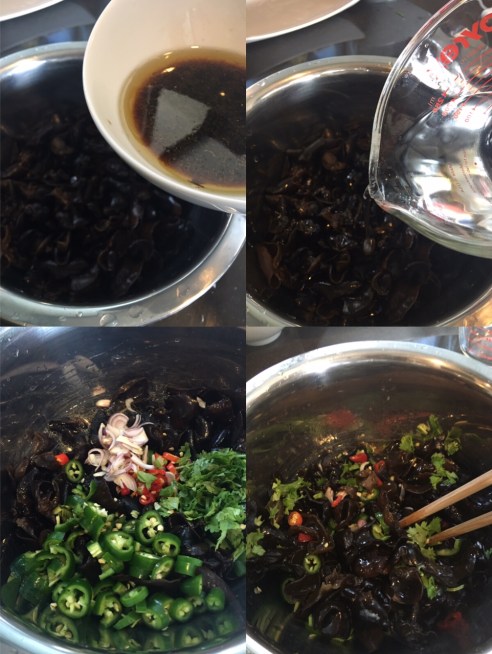
  4. Place drained mushroom in a mixing bowl. Add the vinegar dressing. Add 250ml drinking water and toss into sliced green/red peppers, shallots and coriander. Mix well.IMG_8895.JPG
  5. Chill in the fridge for a half hour then enjoy.