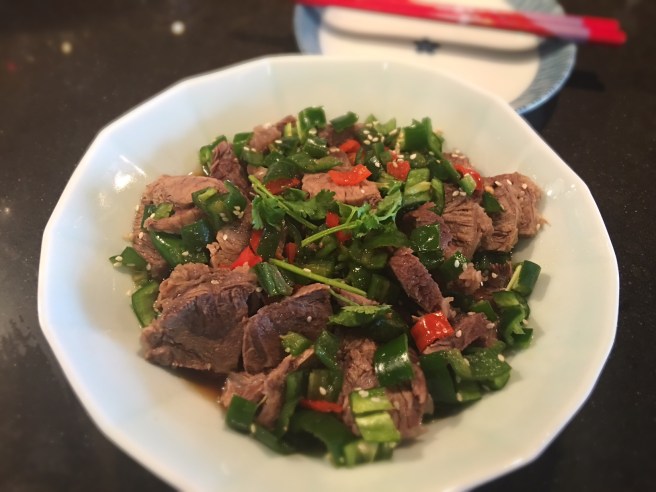
Sichuan Beef Salad生椒小牛肉shēng jiāo xiǎo niú ròu

cover.JPGNo Sichuan peppercorn or fermented bean paste is used here. But this light and refreshing dish will still titillate your palate with loads of flavors. Only using less expensive cut, the dish can be perfectly served as either appetizer or main course for everyday meal or dinner party.

Serves 4-6,

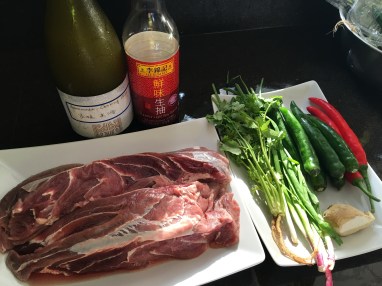
  • 1000g         beef shank 牛键子肉 or any less expensive cut
  • 1000ml       water for blanching beef
  • 30g           ginger生姜
  • 4-5 sprigs      spring onion青葱
  • 1000ml       water for cooking the beef
  • 2 tablespoons  Chinese cooking wine
  • 1 teaspoon     salt

Sauce

  • 2 tablespoon    cooking oil
  • 7-8            fresh green chili pepper, thinly sliced,
  • 1-2            fresh red chili pepper, thinly sliced
  • 4 tablespoons   light soy sauce生抽
  • 1 teaspoon      sesame oil香油

  • 1 tablespoon    white sesame seeds白芝麻
  • Coriander for garnish (optional)IMG_9259.JPG

Method

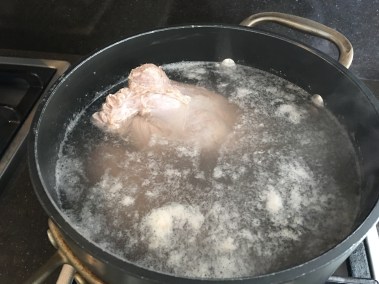
  1. Cut the beef shank into two big equal pieces. Pour 1000ml water in a big pot and add the raw meat. Bring it to boil for 10 minutes. Remove the pot from fire. Rinse the blanched meat wellIMG_9260.JPG
  2. Add another 1000ml water in the same clean pot. Add blanched beef and all ingredients (except salt) in the pot. Bring the pot to boil for 10 minutes with high heat。 Cover the pot and leave it on the stove for 45-60 minutes in low heat (add salt when meat has been cooked for 40 minutes)IMG_9297.JPG
  3. Remove the meat from the pot and let the meat cool off in the room temperature for 30 minutes – Don’t get rid of the stock. You will need them for making sauce later. Then thinly slice the meat.

4. Now let’s make the sauce. Thinly slice all the peppers. Place cooking oil in a frying pan. Place half of the green and red chili peppers. Fry over medium for 2-3 minutes. Add the light soy sauce, sesame oil and 2 cups of beef stock. Mix well. Turn the heat off. The sauce is done.

5. Now, let’s plate. Get a deep bowl, place sliced meat. Pour into the sauce. Add onto the other half of the green and red chili pepper. Sprinkle with white sesame seeds.

6. Leave the bowl in the fridge for 1 hour before serving.


Poached Fish with Green Peppercorn青花椒水煮鱼片

cover1.JPGGreen Sichuan Peppercorn has a distinctly different taste than its red sisters and has become very popular in Sichuan over the years. The green peppercorn is very citrusy and numbing both on the nose and tongue. Its fresh and vegetal taste is a great match for fish, chicken and vegetables. Fresh green peppercorn is hard to come by outside China but the dried ones are available in some of the online stores.
Serves 2-4

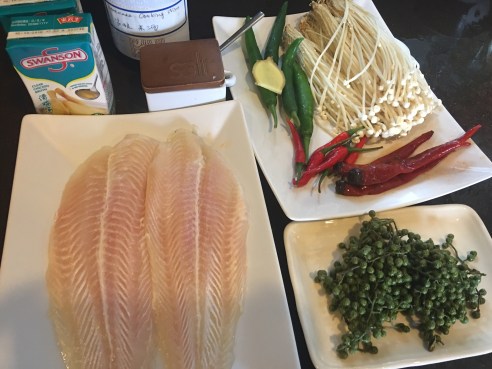
  • 350g                 fish fillet, thinly sliced 鱼肉(剔骨),切片
  • 1 tablespoon   potato or corn starch 生粉
  • 1/3 teaspoon   salt
  • 1 tablespoon   Chinese cooking wine 料酒
  • 1 tablespoon   cooking oil

  • 2 tablespoons   cooking oil
  • 50g         fresh green Sichuan peppercorn (substitute with  15g to 20g dried peppercorn depending on your tolerance of spice and numbness)
  • 1 slice    ginger
  • 2-3         Sichuan fermented red pepper泡椒
  • 4-6         fresh green chili, cut into small pieces
  • 4-6         fresh red chili, cut into small pieces
  • 500ml     chicken stock
  • 150g         golden mushroom 金针菇
  • 1/3 teaspoon or to taste salt

IMG_8946.JPG


Method

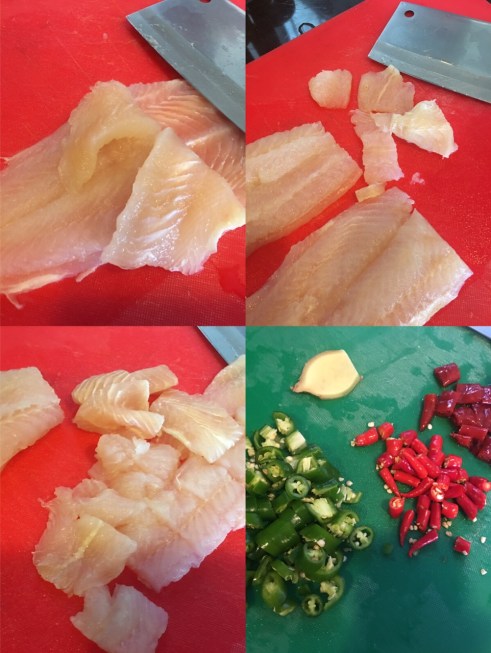
  1. Slice the fish thinly. Cut fresh red and green peppers and fermented red pepper into small pieces.IMG_9024.JPG
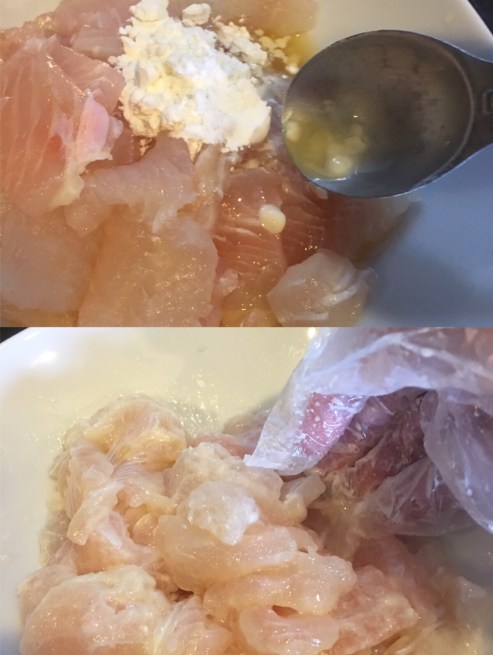
  2. Let’s marinate the fish fillet. In a bowl, add sliced fish fillet followed by corn starch, cooking wine, 1/3 teaspoon salt and 1 tablespoon of cooking oil. Mix it well. Set aside for 20 minutes.IMG_9025.JPG
  3. Place a pot onto stove over small-medium fire, add into ginger, all the fermented pepper, half of the green peppercorns, fresh peppers. Cook for about 5 minutes till fragrance. Add chicken stock and bring it to a boil.IMG_9026.JPG
  4. Add into golden mushroom. Turn the heat up to high. When the soup starts boiling, add into sliced fish fillet. Use chopsticks to gently move around the fish so all the small pieces can be nicely blended with the soup.IMG_9027.JPG
  5. Add 1/3 teaspoon of salt or to taste. Cook the fish for about 3-5 minutes. The fish is well cooked once the meat turns white. Place onto the other half of the green peppercorn and green and red peppers. Plate or serve with the cooking pot.

Sweet and Sour Ribs糖醋小排táng cù xiǎo pái

cover.JPGIt is a famous Shanghai dish that is intended as an appetizer and served cold. The original recipe requires a large amount of oil for deep-frying and a powerful professional gas stove to get the crispy surface of the ribs. This recipe is altered to achieve the beautiful golden color of the meat and amazing sweet and sour taste by introducing a traditional Chinese meat-browning technique 炒糖色 (chao tang shai), or frying the ribs in melted sugar to add color.
Serves 3-4

For boiling spareribs

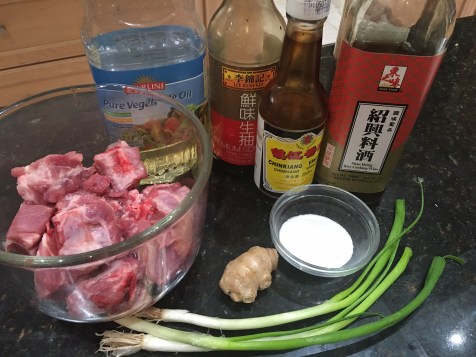
  • 500g spareribs, cut to the bite size 猪肋排,切成小块
  • 2 tablespoons Chinese cooking wine
  • 1 thumb-size ginger, sliced姜片
  • 3 – 4 green onion, white part (save the green part for garnish) 葱白段

For the stir-fry

  • 2 tablespoons            cooking oil
  • 3 tablespoons             caster sugar白砂糖
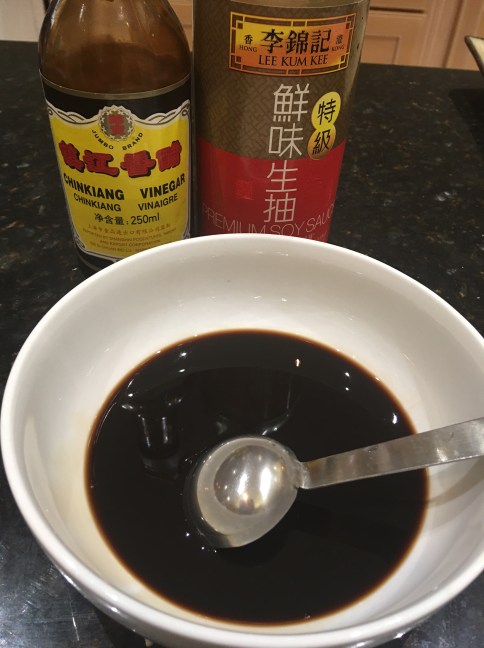
  • 4 tablespoons             Chinkiang vinegar镇江香醋
  • 3 tablespoons             light soy sauce生抽
  • 1/2 tablespoon           dark soy sauce (optional) 老抽
  • 5 tablespoons            waterIMG_4711.JPG

Method

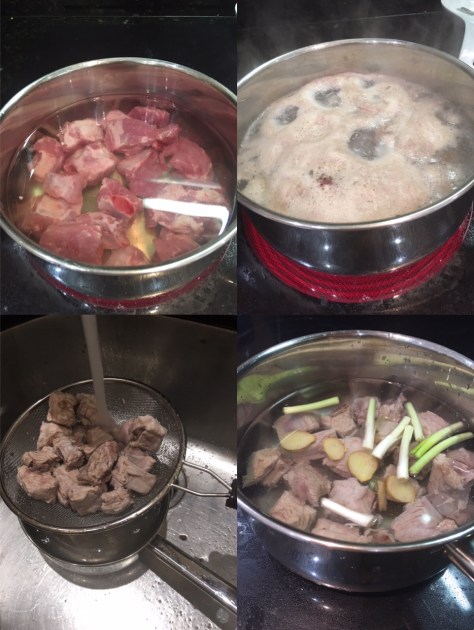
  1. Cut the pork ribs into small bite size and transfer to a large pot. Add water to cover the ribs. Bring it to a boil and cook for a few minutes. Remove the pot from stove. Rinse the ribs with running water. Return the ribs to the water. Add water to cover ribs. Also add two tablespoons of cooking wine, sliced ginger and green onion. Cover and bring to a boil. Turn to small-medium heat. Cook for about 40 minutes till the ribs become soft. Remove the pot from stove. Transfer the ribs to a colander to drain. Scoop out ginger and green onion.IMG_4753.JPGIMG_4754.JPG
  2. Mix chinkiang vinegar, light soy sauce and water in a small bowl, set aside.IMG_4716.JPG
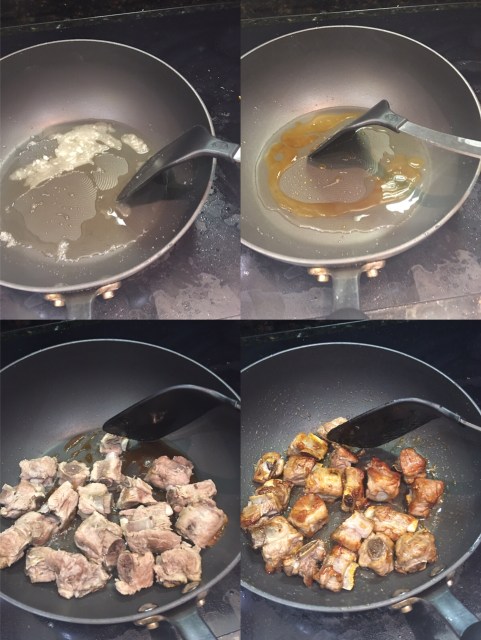
  3. Now, let’s stir fry. Add the cooking oil and sugar to a wok and cook over medium heat. Stir constantly with a spatula to dissolve the sugar slowly. When the sugar is fully dissolved, use spatula to scoop some liquid mixture to observe its color. The process takes about 5-8 minutes. When the sugar turns pale brown, immediately and carefully add the ribs to the wok. Stir constantly to coat them well with melted sugar. Stir until the ribs turn golden brown, turn off heat.IMG_4755.JPG
  4. Now pour into the mixture of vinegar, light soy sauce and water. Bring it to a boil over high heat. Turn to medium heat and cook for about 20 minutes. When the sauce has significant reduced, turn up the heat to thicken the sauce. Stir well to make sure ribs are evenly coated with the sauce. This process takes about a few minutes.IMG_4756.JPG
  5. Transfer the ribs to a plate. Garnish the ribs with chopped green onion. Serve warm or cold.

Tips:

  1. The traditional Chinese meat-browning technique 炒糖色(chao tang shai), or browning meat in the melted sugar is a common technique in Chinese braised dishes. The result is similar to browning the meat – to add color to the meat and to create a crispy surface. With the chao tang shai method, it quickly adds color to the meat without using dark soy sauce and infuses a sweet flavor to the dish. You start with adding sugar to cold oil. Cook slowly until the sugar melts and turns golden. It’s important to get a hot oil temperature without burning the sugar. You will find that the pork gets a nice beautiful reddish brown color in a minute or so, along with the caramelization of the sugar.


Chinese Pao 猪肉白菜包zhū ròu bái cài bāo

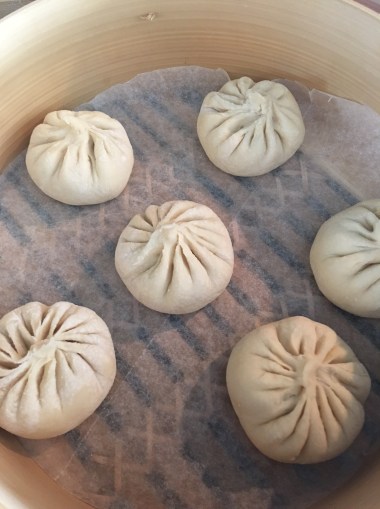
cover.JPGChines Pao, or bāo zǐ in Chinese, are found all over China. It is a staple food for the wheat-eating North and maybe eaten as part of breakfast or snack in South. There’s a knack to wrapping bao zi, It is easier to watch a video on Youtube rather than follow the printed page. Once you’ve grasped technique, you may find it easy, and even therapeutic.
 Yields about 30 Buns,

Wrappers

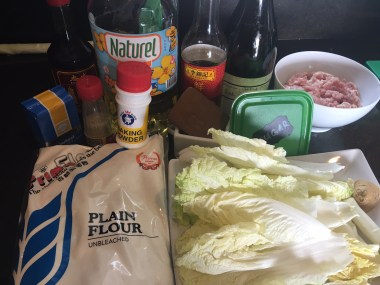
  • 600g          plain flour 中筋面粉
  • 1.5 tablespoon        yeast酵母
  • 3 tablespoons   lukewarm water (40°C)
  • 300g          water in room temperature

Filling

  • 300g           ground pork
  • 300g           Napa cabbage, minced
  • 1 tablespoon    ginger (minced) 姜末
  • 2/3 to 1 teaspoon      salt
  • 1 tablespoon    light soy sauce 生抽
  • 1/2 tablespoon dark soy sauce (optional)
  • 1 tablespoon     Chinese cooking wine料酒
  • 2 teaspoons      caster sugar 白糖
  • 1 teaspoon     sesame oil 香油
  • 1/3 teaspoon    white pepper 白胡椒粉
  • 1 tablespoon    cooking oil (optional)ingredients (2).JPG

Method

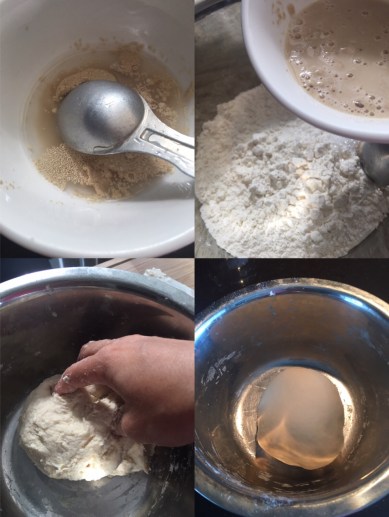
  1. Resolve the yeast in a two-tablespoon lukewarm water in 40℃. Place the flour, baking powder and resolved yeast in a mixing bowl and gradually add in the 300g water. Use your fingers to bring the mixture together and make a dough. Knead the dough for about 6 minutes till it is smooth. Cover the bowl with a plastic bag or kitchen towel. Rest for 20-30 minutes till the dough rises and doubles in size.IMG_9249.JPG
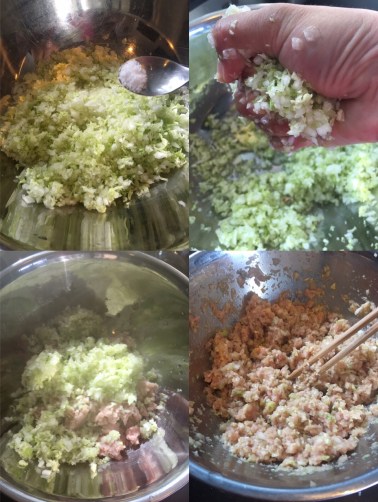
  2. Now make the filling. Finely chopped napa cabbage, add a pinch of salt. In five minutes later, you will see the cabbage become ‘watery’. Use your both hands to squeeze the water out. Then mix it with ground pork and other filling ingredients. filling.JPG
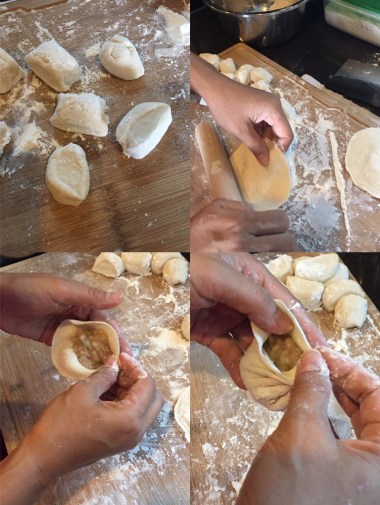
  3. To make the wrappers, cut the dough into 3 equal pieces. Roll one piece into a long cylinder, then cut off 10 pieces of dough the size of walnuts, about 30g each. Dust them lightly with flour. Stand them cut-side up and press down them into discs with the palm of your hand. Roll each disc into a circle about 9cm in diameter – edges are thinner than center.Now let’s assemble to make the buns (Paos), place a wrapper in one hand, put a tablespoon of the filling(25-30g) in the center of the wrapper. Use your other hand to pinch the edge of the dough to enclose the filling. Fold the edges to the center around the filling while twisting so the bun is completed sealed.wrapping.JPG
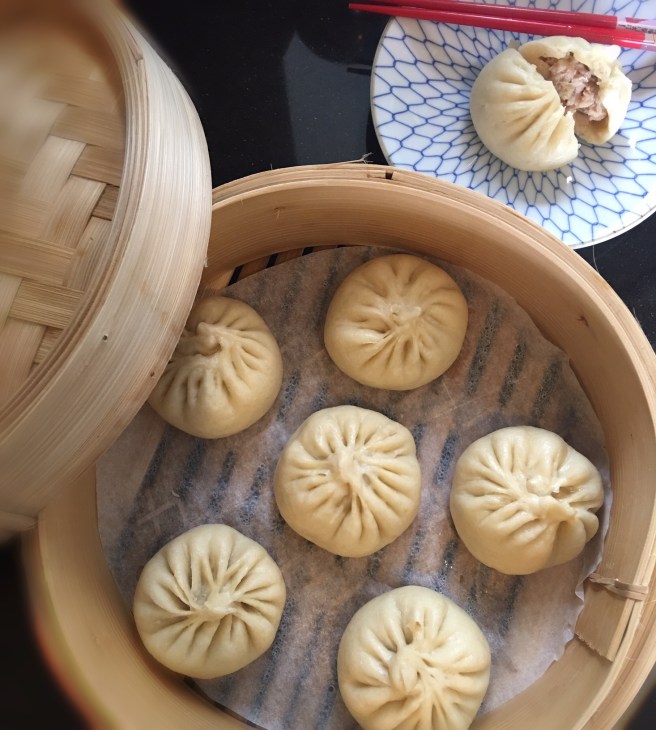
  4. Place all the buns in a steamer basket – make sure there is space between them, as they will expand. 2nd rise.JPG
  5. Fill a steamer pot or wok with water from tap. Place onto the stack of bamboo baskets or any the stainless steamer basket you would have. Cover the steamer. Turn to the high heat and cook for 30 minutes. Turn off the heat. Don’t open the lid yet. Let it rest for 5 minutes then open the lid. Ready to serve.