Yields about 8 Zong Zi (about 100 g for one uncooked Zong Zi)
- 400 g glutinous rice 白糯米
20 dried bamboo leaves (larger size easier to wrap) 粽叶
10 straw ties, or kitchen twine 棕绳
200g pork belly, skin removed, cut into small strips of 16 pieces五花肉
4 salted duck egg, halved咸鸭蛋 - 4 dried Shiitake mushrooms (soaked in the hot water for 20 minutes before use)香菇
- 60g Jinghua ham (or Spanish ham), cut into 8 small cubes金华火腿
- 8 chestnuts (ideally fresh chestnuts. If dried one, need soak them in hot water for 4 hours.), cut it into half size去皮板栗
Rice Marinade
4 tablespoons light soy sauce生抽
Pork Belly Marinade
1 tablespoon light soy sauce生抽
1/2 tablespoon dark soy sauce老抽
1/2 tablespoon sugar白糖
1 tablespoon Chinese cooking wine料酒
1 teaspoon five spice powder五香粉
4 slices of ginger 姜片
2 spring onions, chopped to the length of 5cm香葱
 Method
- Rinse the bamboo leaves and straw ties thoroughly in running water, then put in a large tub with hot water to soak for an hour or so. When the water has cooled, check to see if the leaves are bendable. If still stiff, refresh the tub with hot water and soak another hour. If you use cold water, repeat the above process by just leaving the dry leaves in the water overnight. Once the leaves are completely bendable without breakage they are ready to use. Keep them soaking in the water until you use them.

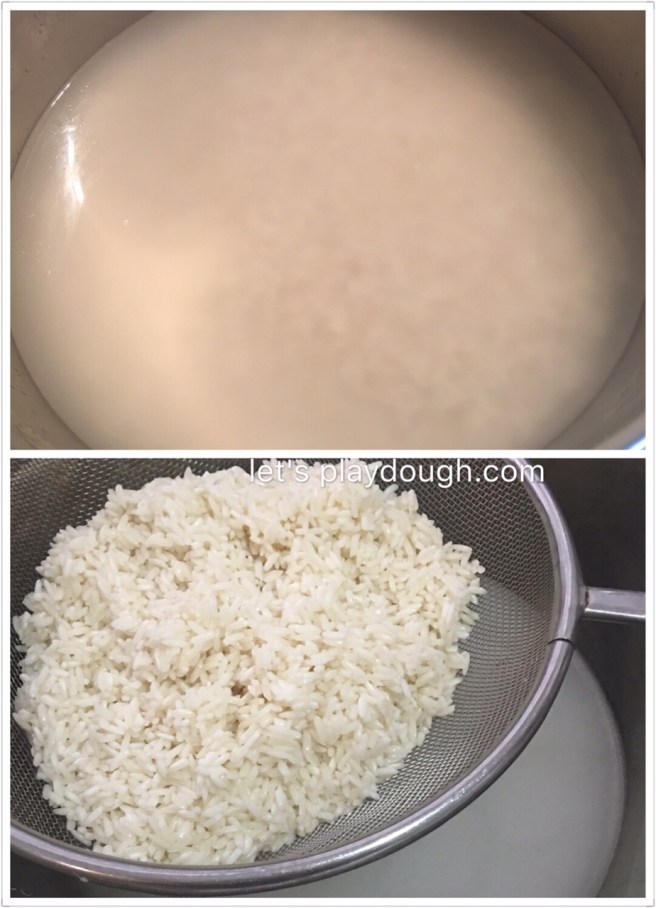
- Rinse the rice and soak for an hour in cool water. Strain out water thoroughly then mix in light soy sauce. Let marinate for another hour.

- Remove the pork belly skin. Slice the meat into 16 pieces (make sure meat and fat are equally split). Mix in the marinade, cover and refrigerate for an hour or so. Note here: you cannot substitute pork for pork fat. It just won’t work and you’ll get a dried out tough piece of meat inside your Zong zi instead of meltingly pull-apart pork and the fragrant taste of pork fat infused through the whole dumpling. Pork fat? Yes, any fat is delicious. You probably eat Zong zi only once a year. So go for it!

- Soak dried shiitake mushrooms in boiling hot water (just barely cover). When the mushrooms are soft through, take them out, give them a squeeze to get rid of excess water and half each mushroom. Wash the black stuff off duck eggs, then break open the eggs and remove the hard yellow yolk inside, cut into halves and put aside. Cut the Jinghua ham into 16 equal pieces. Steam the ham with 20g sugar (rock sugar is ideal) for about 20 minutes.
- Now let’s assemble. With all the prepared ingredients at hand, take two bamboo leaves and cut off the hard tips at the base. Put them side by side, overlapping by 1cm or so (depends on your leaf size). It should feel structurally like one leaf and not two. Fold the base up by around 10cm and then immediately fold in the right hand side of leaf structure by approx 5cm to create a sturdy little pocket as per the photo below. There should be no opening at the bottom otherwise the rice might escape during cooking later.

- Hold this pocket together with one hand, use the other hand to scoop 3 tablespoons of rice into the pocket, then you can pile on 2 pork pieces (making sure each dumpling has pork fat in it), 1 halved salted egg, 2 quarters of mushrooms, 1 piece ham and 2 chestnut pieces. Finally add 1 more tablespoon of rice to the top.
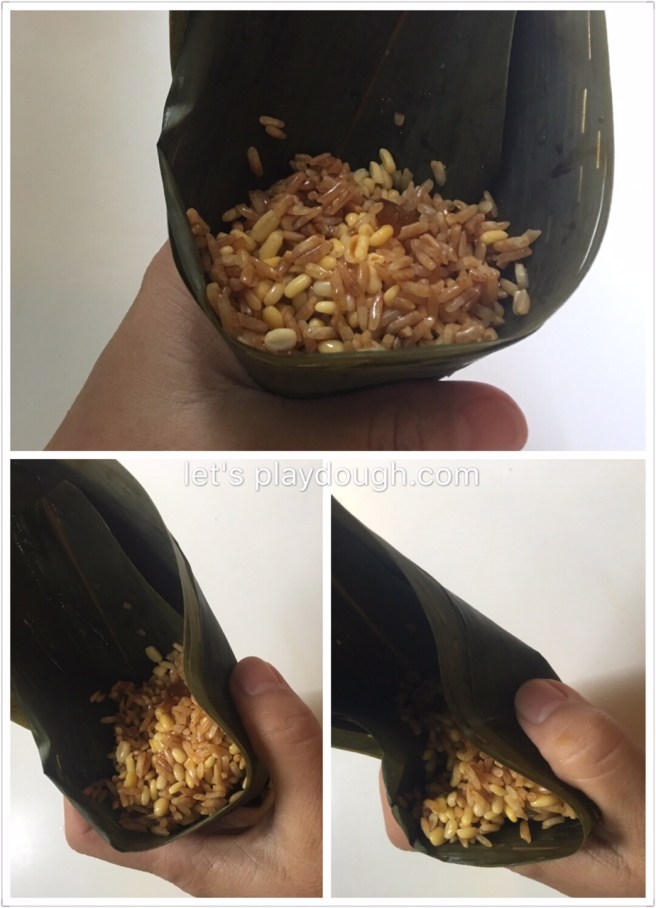
- Now comes the tricky part. Hold zong zi longwise from your body. Fold over right bit of bamboo leaf (sticking out beyond your fillings) snuggly over the fillings, then fold left bit of bamboo leaf over that and tuck it under your thumb as per the photo below. Try to get a snug fit of leaves over fillings, not packed but snug. Do not squeeze the zong zi while you’re holding it or else the rice will come out packed and sticky instead of fluffy. Gentle cradling is the operative word here, I think.
You should have enclosed all the zong zi fillings and rice with this last fold. Now you will only have a the remaining tip of the bamboo leaf (sticking towards you at this point) to fold. Grab it and pull slightly to create snug fit. Pinch the leaves together along the bottom edge of zong zi and fold upwards and tuck again under your thumb. The dumpling should be completely wrapped by the bamboo leaves now. Use scissor to cut off any protruding leaf tips or just tuck them under.
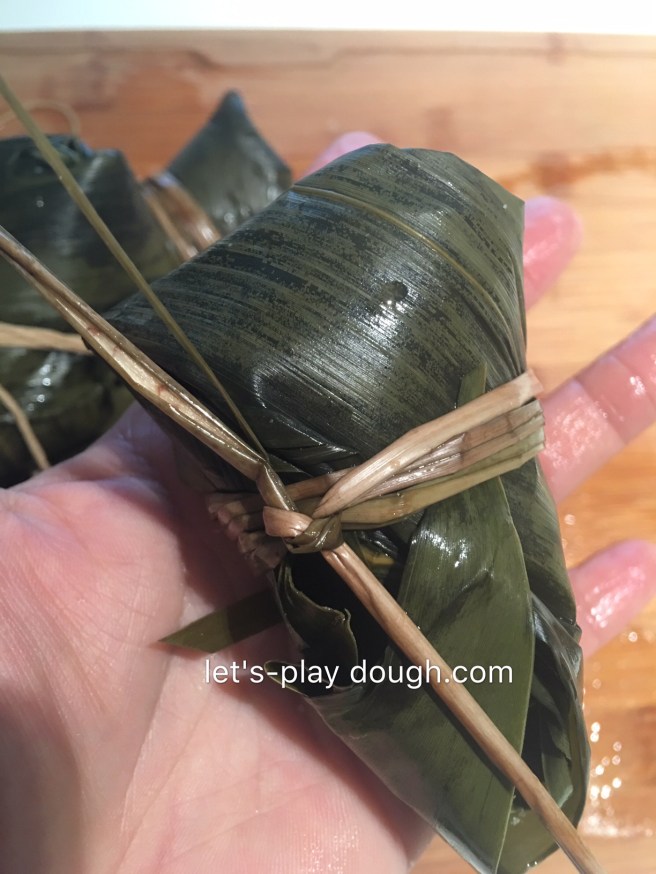
Grab a tie or string with your free hand. Wrap around the top of the zong zi once and tie a knot. Then wrap the straw tie (or string) around and around as snuggly as you can, again not squeezing the zong zi to death at any time, until you reach the bottom and then tie off with another secure knot. Cut off any loose ends and you have wrapped your zong zi!
How to cook Zongzi
- Add enough water to cover Zongzi and then bring to a boil. Simmer for 90 minutes and then soak for around 1 hour after turning off the heat.
- Remove the leaves and serve directly.
 Serves 3-4,
 Serves 2-4,
  Method
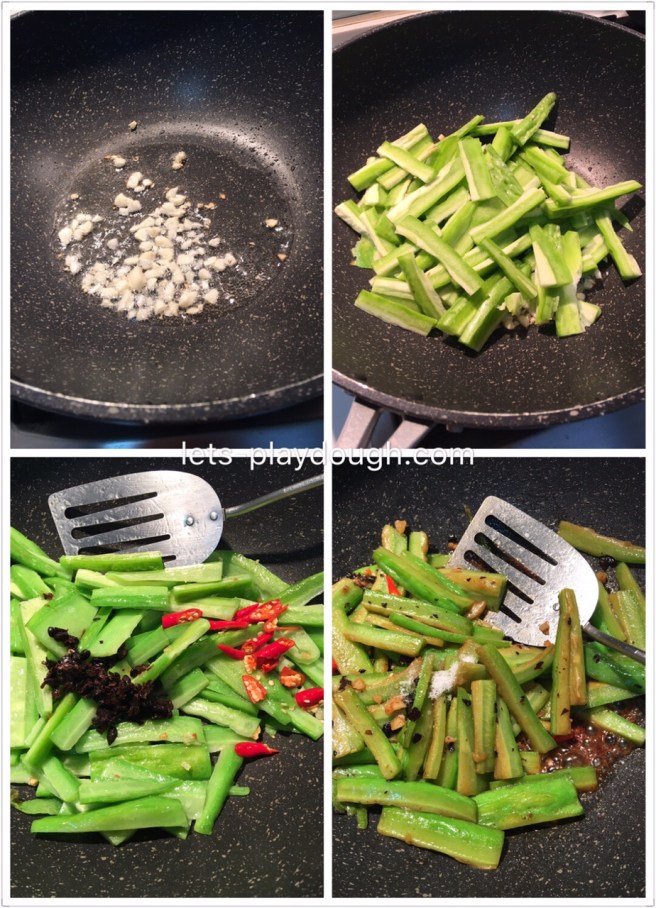
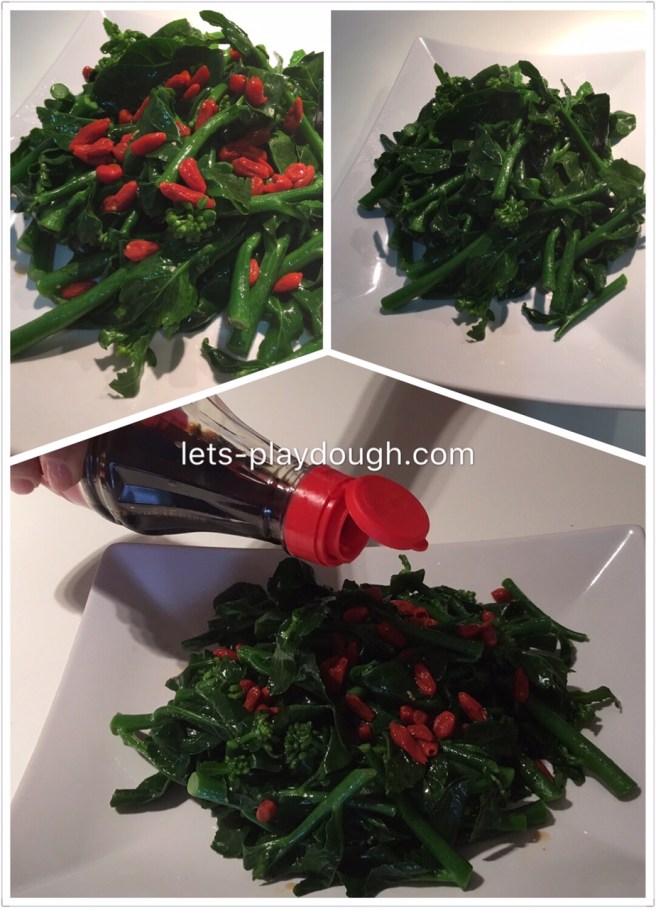
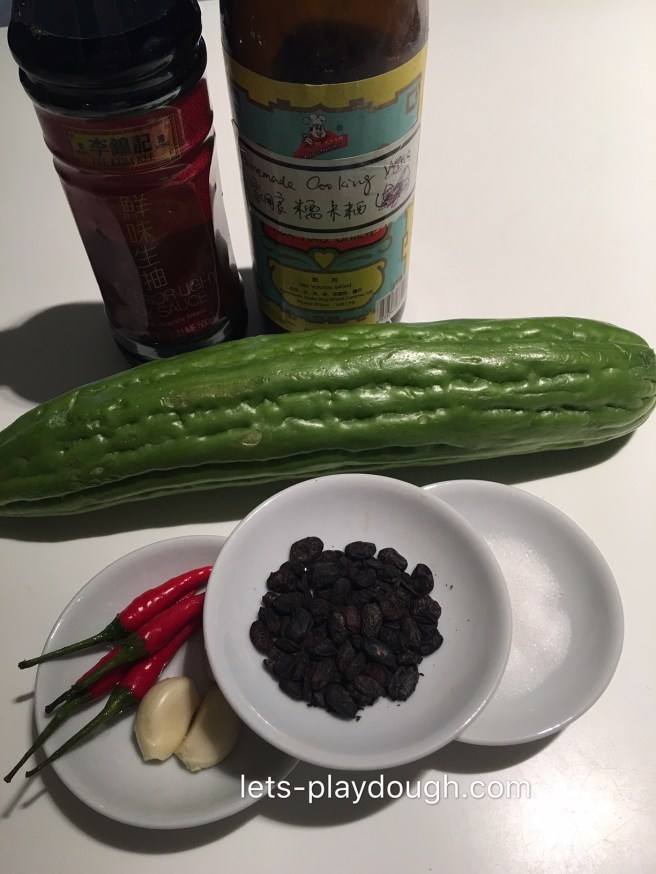
 bái zhuó, one of the unique cooking methods in Chinese cookery and the healthiest and tastiest ways to cook your favorite vegetables. The dish contains only four ingredients and takes five minutes to put together.