Chinese Pumpkin Pastry 万圣节南瓜饼wàn shèng jiē nán guā bǐng

 coverTrick or Treat! Make these together with your kids or just for yourself to get you into the Halloween spirit! The recipe originates from a traditional Chinese pumpkin pastry – nán guā bǐng, but was given a modern twist with the cooking method of oven-baking. It is made from fresh pumpkin. No single drop of oil used. It offers a nice texture of crunchiness of the breadcrumbs contrasting with the softness of the mixture of the pumpkin puree and glutinous rice flour.

Yields 10 pieces of the pumpkin pastry,

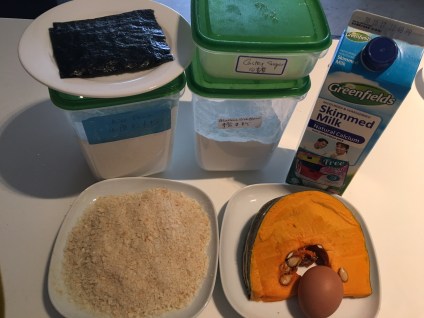
  • 200g           pumpkin purée (you will need 300g fresh pumpkin available at any grocery store) 新鲜南瓜
  • 90g               glutinous rice flour糯米
  • 10g                Rice flour粘米粉
  • 60g                 caster sugar白糖
  • 1 tablespoon milk
  • 1 cup             breadcrumbs (I like to use Panko, a Japanese style breadcrumb made from white bread without crusts)面包糠
  • 1                     egg (beaten)
  • 1-2 sheets         seaweed 海苔ingredients.JPG

Method

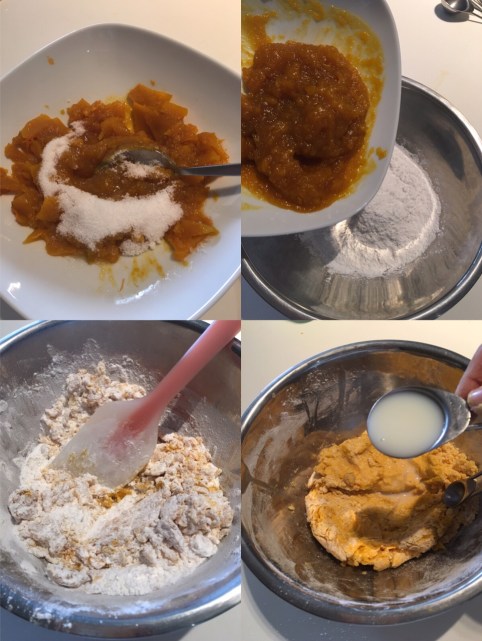
  1. To make the pumpkin purée, remove the skin and seeds, thinly slice it then cover the bowl with cling wrap and put in microwave in high heat for 4 minutes. IMG_3173
  2. Add into sugar when the puree is still hot. Mix well. Let the puree cool it off. Combine the puree with dry ingredients of glutinous rice flour and rice flour. If the dough is too dry, add 1 tablespoon of milk.IMG_3174.JPG
  3. Cover the dough with a plastic bag and rest the dough for 10 minutes. Cut the dough into 10 pieces, roll each piece into a small ball, use your palm gently press down each ball to make a disc.IMG_3175
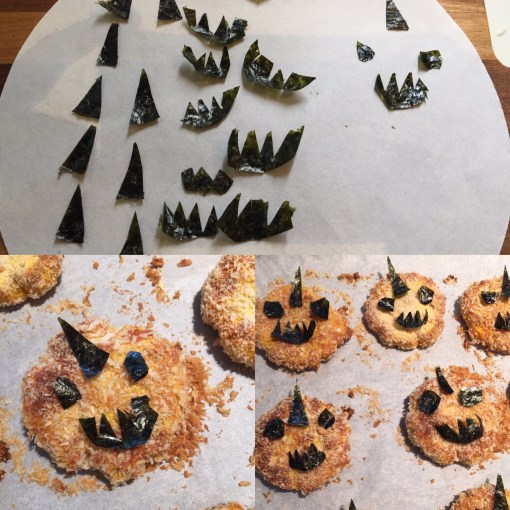
  4. Line a baking tray with parchment paper. Pre-heat the oven to 200°C. Dip each disc in the beaten egg. Dredge in the breadcrumbs. Repeat the process for the rest of the discs. Place them all in the baking tray. Move the tray onto the middle rack of the oven. Bake for 20 minutes.IMG_3176.JPG
  5. Use a scissor to cut the seaweed into small decoration pieces to make the “scary face”. Remove the tray from the oven and place on the decoration pieces of seaweed. Thick or treat! Enjoy!IMG_3178.JPG


Barbecued Beef Short Ribs 韩式烤牛仔骨

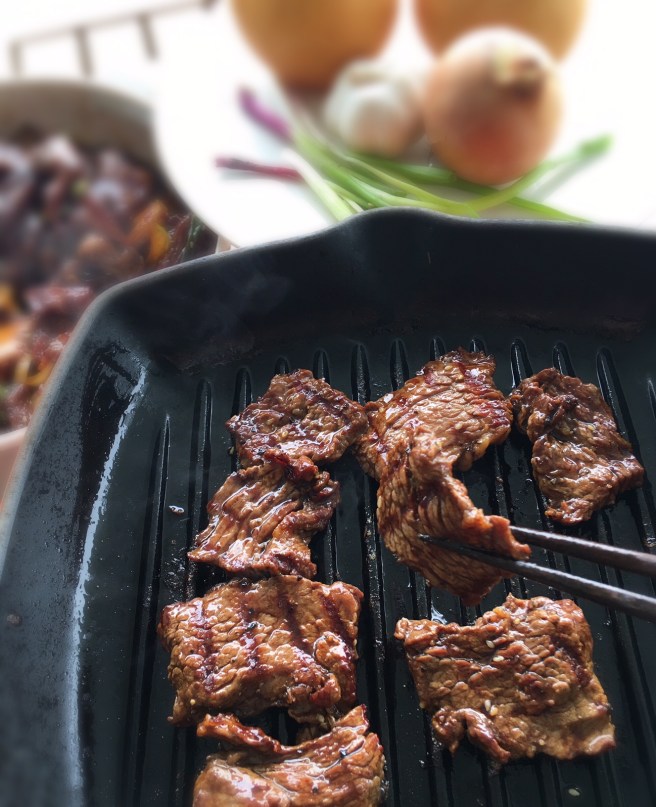
IMG_2269.JPGA fun and tasty way to enjoy the beef. The secret to this dish, or called Galbi in Korean, is to marinade the beef overnight to allow the flavour to infuse. The natural fluid acidity in the pear helps to tenderize the meat while sake/rice wine adds a slightly sweet edge.

Serves 6-8

  • 900g                beef short ribs or boneless short ribs

Marinade sauce

  • 4                       spring onions, thinly sliced
  • ½                      medium-size yellow onions, thinly sliced
  • 1                       large Asia pear, core and chopped into cubes
  • 1 teaspoon      ginger, thinly sliced
  • 2                       garlic cloves, crushed
  • 1 tablespoon   light soy sauce
  • 3 tablespoons  dark soy sauce
  • 2 tablespoons  sesame oil
  • 2 tablespoons   Japanese sake or high quality Chinese rice wine
  • 1 teaspoon       sea salt
  • 2 teaspoons       freshly ground black pepper
  • 2 tablespoons  caster sugar
  • 1 teaspoon       sesame seeds

Dipping sauce

  • 2                      Spring onions, minced
  • 1 tablespoon   Korean chili powder (optional)
  • 1 tablespoon   rice vinegar

IMG_0747Method

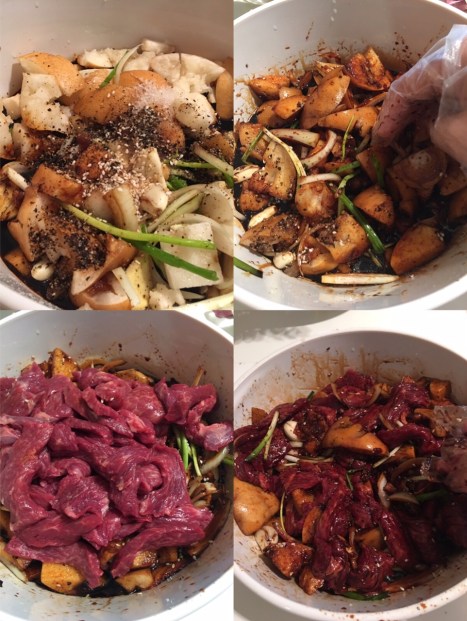
  1. To make the marinade sauce, place the sliced spring onions and yellow onions in a large bowl. Core and chop the Asian pear, being careful to save the juices. Then add into the bowl. Combine rest of the marinade ingredients and mix well.
  2. Add the short ribs pieces to the marinade, stirring to coat them, leave to stand for at least 2 hours (ideally overnight) to allow flavours to permeate and the meat to soften.IMG_2270
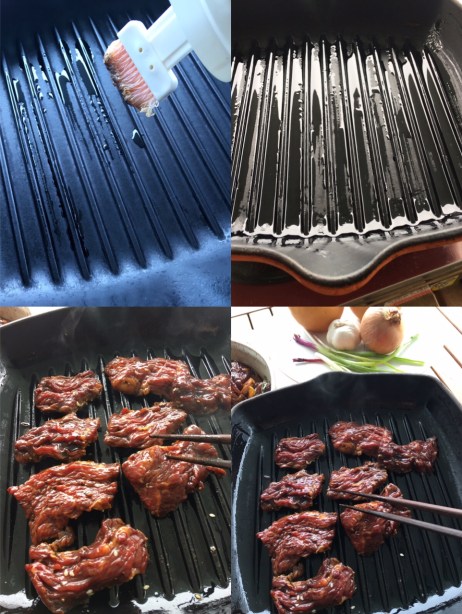
  3. Heat a heavy griddle pan or frying pan and add the ribs. Keep turning them to cook the meat evenly. When they become dark brown, serve immediately with the dipping sauce.IMG_2271.JPG

Tips

  1. Butchers should be happy to prepare the short ribs  pieces for you; ask for pieces approximately 5cm in square.


Fisherman Salad泰式海鲜沙拉

IMG_2206I respect the Thai cuisine as much as I do to Szechuan food because of their mastery of the arts of flavours. Chefs of both cuisines delight in combining a variety of tastes to create dazzling complex flavours. Love the simple Thai salad dressing of sour-sweet-salty-spicy flavors made with lime juice, sugar, salt and chilies. The dressing can be used with boiled or grilled seafood, including fish fillet, mussels, squid, octopus. Feel free to add crispy vegetables such as yard-long beans, shallots of green mango to counter balance the soft and chewy seafood.

Serves 3-4,  

  • 300g       squid, scalded in a crisscross pattern and cut into slices
  • 150g       shrimps, shelled and deveined, discarded heads but keep tails intact
  • 3               yard-long beans (optional), cut into slices in 5cm 豇豆
  • 1               lemongrass (green part only), thinly sliced香茅
  • 2               small shallots, thinly sliced小红葱
  • 2               spring onions, cut into slices in 5cm
  • 1 sprig      fresh coriander (separate the stalks and leaves)香菜(for garnish), roughly chopped香菜

Sour-sweet-salty-spicy Dressing (makes 1 cup)

  • ½ teaspoon                     sea salt海盐
  • ¼ cup                                fish sauce鱼露
  • 4-5 tablespoons             caster sugar白砂糖
  • ½ cup                                lime juice青柠汁
  • 2 cloves                             garlic, minced
  • 8                                        red Thai bird chilies, minced

IMG_2210.JPGMethod

  1. To prepare the dressing, in a small saucepan, combine the sea salt, fish sauce, and sugar and heat over until the sugar is dissolved, about 2 minutes. Transfer the mixture to a small mixing bowl to cool, then stir in the lime juice, minced garlic and chilies.IMG_2094.JPG
  2. Blanch the squid and shrimp, one at a time in a pot of boiling water over high heat till just done. Drain. Transfer to a mixing bowl, add in yard-long beans, lemon grass, shallots, spring onions and coriander stalks. Toss well. Pour into 1/2 cup of the spicy dressing. Mix well. Spoon onto a serving plate and garnish with sprig of coriander leaves.IMG_2209.JPG
  3. Reay to serve.

Cooking notes

  1. Squid must be cooked either a very short time or a very long time. Anything in between turns it into rubber. Two minutes over high heat is plenty. Beyond that will require at least 30 minutes to an hour to re-tenderize it.


Poached Beef in Hot Chili Broth水煮牛肉shuǐ zhǔ niú ròu

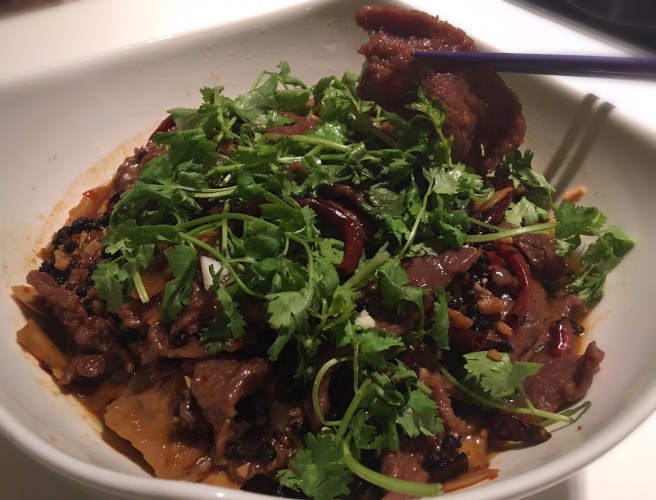
IMG_2934Sichuan cuisine owes its notoriety to the Hot-and-Numbing Flavor’(麻辣味má là wèi), a powerful combination of chilies and Sichuan peppercorns. The poached beef in hot chili broth, or Shui Zhou Niu Rou, is a classic dish of the favor. The dish is satisfying, addictive and unforgettable once you taste it. The cooking method is surprisingly simple.

Serves 2-4

  • 300g                               beef tenderloin, thinly sliced 牛里脊肉,切片
  • 2 tablespoons               potato or corn starch 生粉
  • 2 tablespoons                water in room temperature
  • 1/3 teaspoon                salt
  • 1 tablespoon                Chinese cooking wine 料酒
  • ½ tablespoon               light soy sauce 生抽
  • 300g                               vegetable of your choice (e.g. soy bean sprouts or bok choy or combination of both)
  • 50g                                bamboo shoots (optional)
  • 4 tablespoons              cooking oil
  • 1 to 2 tablespoons      Sichuan peppercorns (depending on your level of tolerance of the numbing Szechuan peppercorn)四川花椒
  • 12g                               garlic cloves, minced蒜末
  • 6g                                 ginger, minced姜末
  • 3 tablespoons            Sichuan  fermented bean paste (Doubanjiang)四川郫县豆瓣酱
  • 8-10 dried chili pepper干红辣椒
  • 1000ml                       water
  • 10g                              sugar白糖
  • Coriander for garnishing香菜

 Method

  1. Slice the beef tenderloin thinly.
  2. In a bowl, add corn starch and 1 tablespoon of water. Mix it well. Combine ‘watered starch’, sliced beef, salt, cooking wine and light soy sauce. Mix well. Set aside for 2 hours. Make sure each slice of beef is well coated with ‘watered starch’. This will help keep the beef from being overcooked during the late poaching process.
  3. Bring a big pot of water to boil, add the vegetable of your choice. Blanch them by batches. Drain. Place blanched vegetable in a big and deep bowl. Set aside.
  4. In a frying pan, add 1 tablespoon of oil, fry the Sichuan peppercorn over low heat for about a few minutes. Add in minced ginger and garlic. Continue fry for a few minutes. Add into the dry chili and cook for 1 more minute. Now add the doubanjiang, keep frying until you can see the red oil come out. Now pour into the pan around 1000ML water, add sugar. Simmer for around 15-20 minutes with lid covered. During this process, you may smell the strong aroma brought by the broth.
  5. During the process, in another pot, bring a big pot of water to boil, add the vegetable of your choice. Blanch them by batches. Drain. Place blanched vegetable in the bottom of a big and deep serving bowl. Set aside.
  6. Now back to the frying pan. Open the lid. Turn up fire , bring the broth to a boil, add in the beef slices by batches and cook until the broth begins to boil again. Once boiling, wait for around 20 to 30 seconds, transfer them out and place them on top of the blanched vegetable immediately. Pour half of the left broth into the serving bowl.
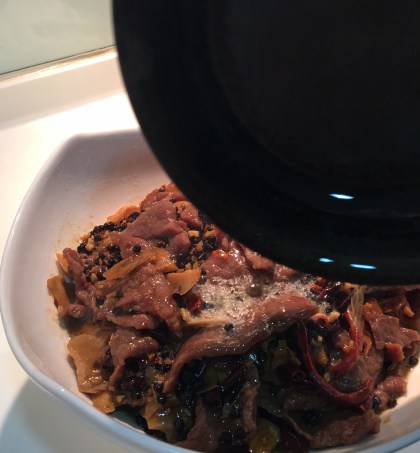
  7. Use another pan, heat up 3 tablespoons of cooking oil over high heat until the oil becomes really hot (you can almost see the smoke.) Evenly pour the oil onto the beef in the serving bowl. Be careful during the process; do not get burnt!FullSizeRender.jpg
  8. Garnish with coriander. Serve immediately

Tips

  1. The dish needs to be served immediately as the left heat inside will continue heating the slices. But watch out your mouth. Take one piece out and cool down for several seconds before enjoying.
  2. When poaching the beef, let the beef  slices stay still for a minute once you add in the boiling broth. This helps ‘watered starch’ continue coat the beef so to create a layer to keep the beef overcooking, resulting a tendered and juicy beef.  After a minute, you can use chopsticks to move around the beef slices in the pan so that each slice is evenly cooked.