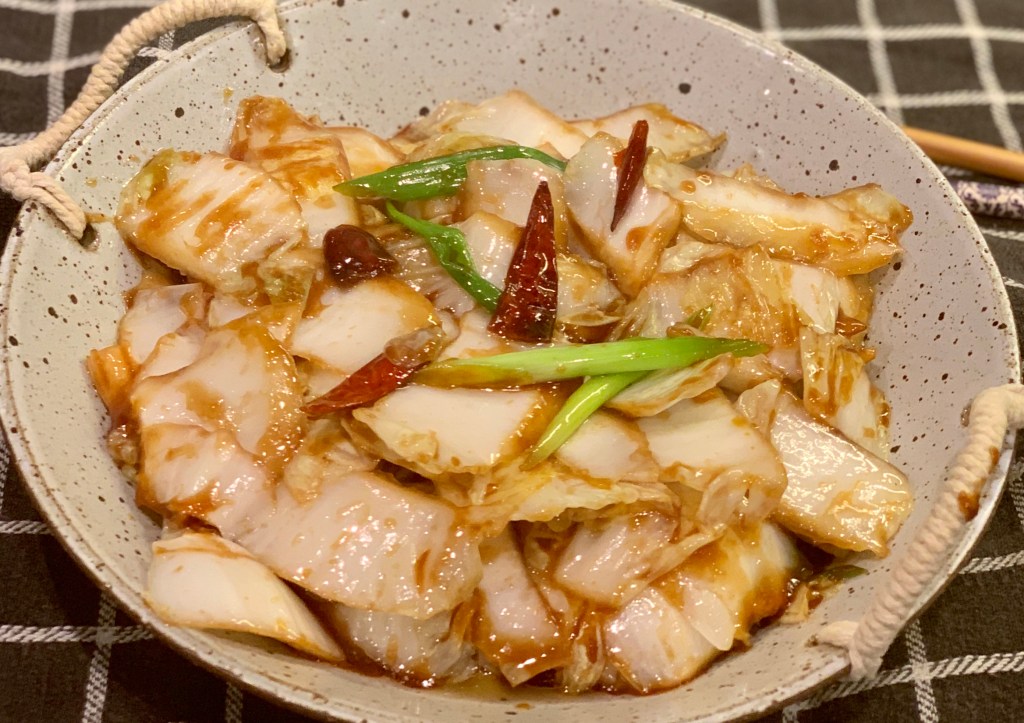
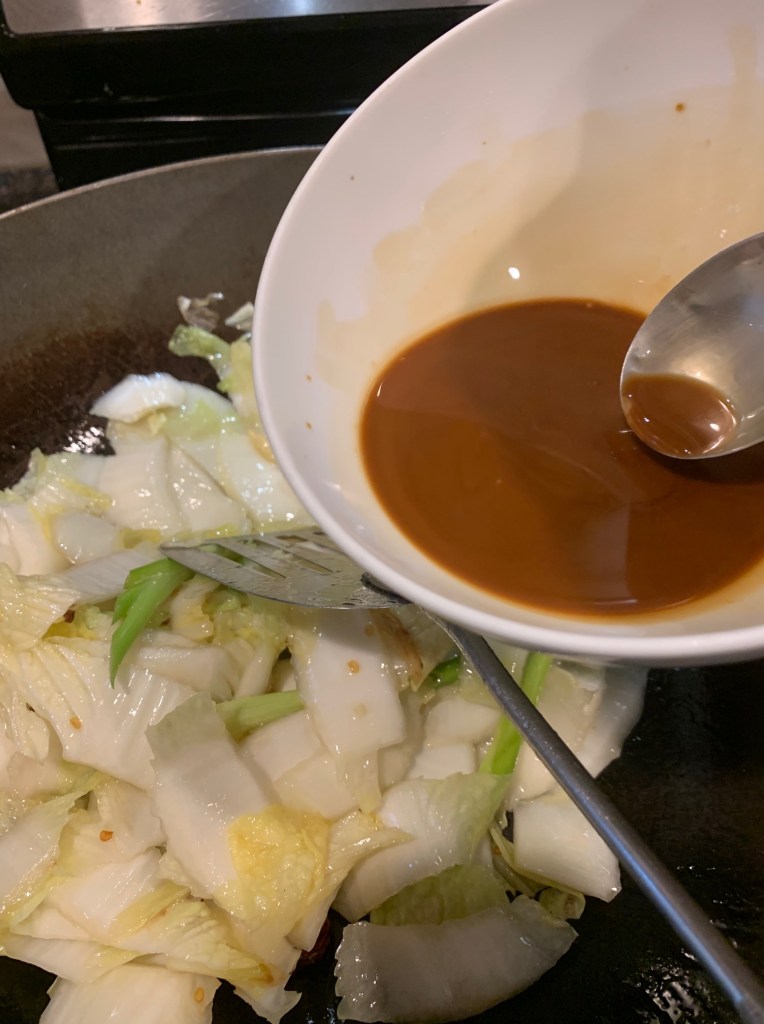
Stir-fried Napa Cabbage with Hot and Sour Sauce醋溜白菜cù liū bái cài

Known as Big White Vegetable (Dà Bái Cài/大白菜/) in Chinese, Napa cabbage plays such an important role that an old Chinese saying claims “Bǎi Chī Bú Yàn Dà Bái Cài/百吃不厌大白菜”, meaning “One can never get tired of eating Napa cabbage”. It used to be one of the few vegetables available during winter in Northern regions of the country. So most home cooks master skills for cooking it in various ways. You can find it in salads, stir-fries, soups, dumplings, steamed & braised dishes, etc.

My personal favorite has always been stir-fried Napa cabbage with hot & sour sauce (醋溜白菜). It’s a simple, humble dish that calls for common ingredients and requires basic stir-frying techniques. Yet, to produce it to a restaurant quality, you’ll need to pay attention to a few important details.

When it comes to cutting vegetables for Chinese stir-fried dishes, there are a couple general rules to follow:

  1. Make sure to drain/dry the cabbage leaves very well after washing as you wouldn’t want too much water going into the wok.
  2. Cut off the end of the cabbage (about 1cm). Separate all the leaves with your hands. Cut the vegetable in a way that enables maximum surface absorption of flavours from the sauce. Lay one leave flat on the chopping board. Cut it into bite-sized pieces at a 30-degree angle. Repeat to finish all the leaves. All the pieces are cut approximately the same size. This is to ensure even doneness during cooking.
  3. When stir-frying, the heat should be high and the cooking time needs to be as short as possible. This way, the white part of the cabbage remains crunchy and the dish doesn’t look too wet.

Serve 2-4

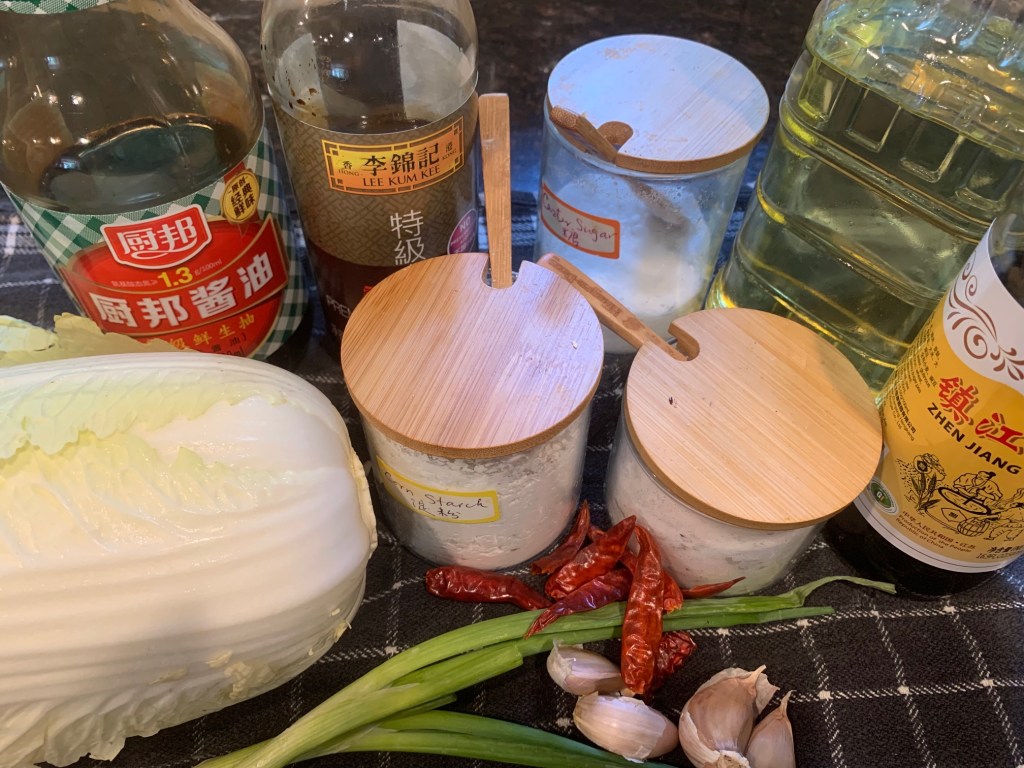
450g/1lb         napa Cabbage大白菜, cut into bite size

2 tablespoons                          cooking oil

4 cloves, garlic cloves, peeled and roughly chopped

5 to 6                           dried red chili干辣椒

1 to 2 sprig                              spring onions, sliced

Stir-fry sauce

1 tablespoon                           corn starch淀粉

1 teaspoon                              salt

2 teaspoons                             white sugar白糖

1 and half tablespoons            chinkiang vinegar镇江香醋

1 tablespoon                           light soy sauce生抽

½ tablespoon                           dark soy sauce老抽

2 tablespoons                          water

Method

  • Prepare the cabbage. Separate the leaves of the Napa cabbage. Lay one leaf flat on the chopping board. Cut it into bite-sized pieces at a 30-degree angle. Repeat to finish the rest.
  • Mix the stir-fry sauce. In a bowl, combine corn starch, salt, sugar, chinkiang vinegar, light soy sauce, dark soy sauce and water.
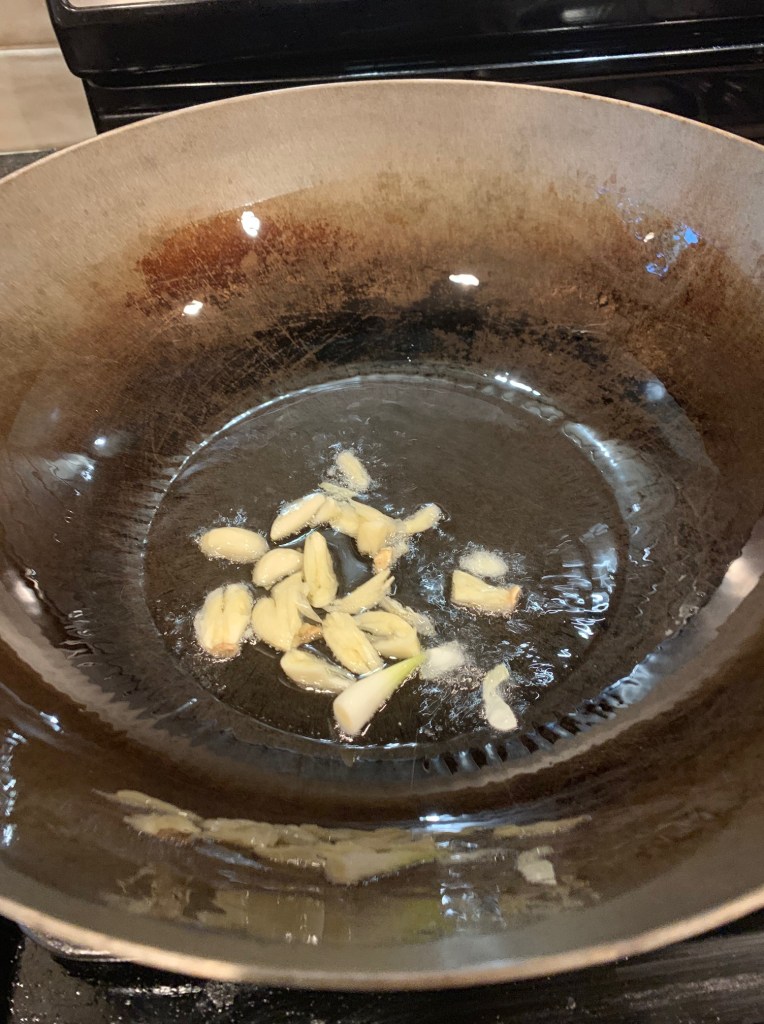
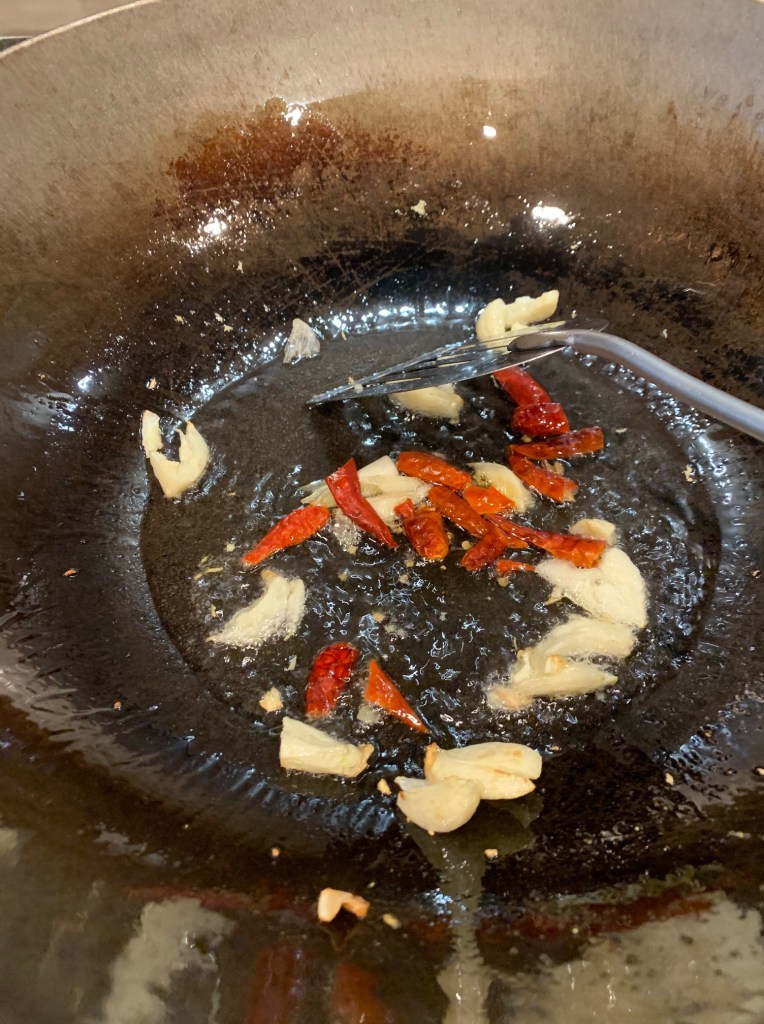
  • Now let’s stir-fry. Heat up a wok over high heat until it starts to smoke. Add into 2 tablespoons cooking oil then add garlic and dried chilies. Fry until fragrant (do not burn). Put in the cabbage. Stir fry until the green leafy part starts to wilt but the white part remains crunchy..
  • Give the sauce a good stir then pour into the wok. Add spring onions. Mix well. Remove from the heat once the sauce thickens. Serve immediately.

Pork Carnitas墨西哥手撕猪肉

Carnitas is Mexico’s version of pulled pork. If you’re new to Carnitas, try this recipe and it might become your new addiction.

Made by slow cooking pork fully submerged in lard, this confit method of cooking yields pork that’s unbelievably rich and tender with loads of crispy golden bits.

Don’t skip the step to brown the Pork Carnitas. Pan frying to get the golden bits is not optional – the cooked and shredded pork has to be double cooked in the skillet to capture the elusive combination of flavourful juice and crispiness.

My secret of the recipe is to include soy sauce in the rub to add into another layer of the flavour, which you would not expect from a Mexico restaurant. But this is optional for you.

Serving 6-8

  • 2kg/4lb pork shoulder, skinless, boneless (2.5kg/5lb bone in)
  • 2 teaspoons    salt
  • 1 teaspoon      black peppercorn
  • 1 yellow onion, chopped
  • 4 garlic cloves, minced
  • 1 japapeno      deseeded, chopped, (optional)
  • 3/4 cup            fresh orange juice (from 2 oranges)

Rub

  • 2 teaspoons                ground cumin
  • 1 tablespoon               dried oregano
  • 1 tablespoon               olive oil
  • 2 tablespoons             light soy sauce

Method

Step 1- Slow cook the pork shoulder

  1. Preheat the oven to 325F°/160C°.
  2. Rinse and dry the pork shoulder, Rub all over with salt and pepper.
  3. Combine the Rub ingredients then rub all over the pork.
  4. Place the pork in an oven-proof pot, top with the onion, jalapeño (optional), minced garlic (don’t worry about spreading it) and squeeze over the juice of the oranges.

5. Cover the pot and bake in the oven for 3 to 4 hours until the pork is tender and can be easily pulled apart. Remove the pork from the pot. Use your hand or two forks to shred the pork.

6. Skim off the excess fat from the juices left in the pot. This is optional. Only do this if you think you have too much fat in the juices. If you have a lot more than 2 cups of juice, then reduce it down to about 2 cups. The liquid will be salty, it is the seasoning for the pork. Set liquid aside – don’t bother straining onion etc, it’s super soft.

Step 2 – Crisp cooked and shredded pork

  1. Heat 1 tablespoon of cooking oil in a large non-stick pan or well-seasoned skillet over high heat. Spread pork in the pan, drizzle over some juices. Wait until the juices evaporate and the bottom side is golden brown and crusty. Turn and just briefly sear the other side – you don’t want to make it brown all over because then it’s too crispy, need tender juicy bits.
  2. Remove pork from skillet. Repeat in batches (takes me 4 batches) – don’t crowd the pan.

Step 3 Taco Fixings

  1.  warm tortillas according to packet instructions.
  2. Pile up the crispy pork carnitas. Spoon pico de gallo or any spicy tomato salsa on the pork then top with 1 or 2 spoons of sour cream. Enjoy!

Tips:

1. Best way to store: Shred pork but don’t pan fry. Keep pork and juice separate, refrigerate up to 5 days or freeze up to 3 months (for freezer, I put pork in containers/ bags and put juice in ziplock bags in the same container).

Gently reheat juice to make it pourable (congeals when cold). Pan fry per recipe, drizzling with juice.

3. Storing leftovers after pan frying: Keeps extremely well, but tends to lose juiciness when it cools down. Just drizzle with juice, cover with cling wrap and reheat – the crispy bits hold up very well. It’s not quite as crispy as when cooked fresh, but still seriously tasty.

Pico De Gallo墨西哥碎番茄沙拉

Sometimes when you eat authentic Mexican food, they give you this salsa stuff made with tomatoes, onions, and jalapenos. You can add a squeeze of lime juice to pico de gallo, but I prefer this basic recipe. Once you serve this with your Mexican dish such as tacos, you will want it with all your Mexican dishes.

Serves 4 to 6

  • 4 plum tomatoes, diced
  • 1 medium-size yellow onion, diced
  • 1 jalapenos, diced  (optional)
  • 2 sprigs or 1 cup, cilantro, minced
  • 1 teaspoon         salt
  • 1 tablespoon      extra virgin olive oil
  • 2 tablespoons              lime juice       

Method

  1. In a medium bowl, combine tomato, onion, jalapeno pepper (optional)) and cilantro. Season with salt, olive oil and lime juice. Stir until evenly distributed. Refrigerate for 30 minutes before serving.

Thai Chicken Salad

Borrowed the idea of Laab (meat salad in Thai), the recipe gives a tasty option to make good use of a lot of leftover roast you most likely have in summer. The simple Thai dressing transforms the less desired leftover and make it a great choice for a quick lunch or a refreshing appetizer for your family dinner.

The defining element of this Thai meat salad or laab dressing, is the toasted rice powder by using any kind of white rice, though traditionally it is done with Thai sticky rice. It is not laab without toasted rice powder. So no excuse to skip this ingredient.

I have provided a small “base” recipe so you can scale up to whatever quantity of leftovers you have. Be sure to scale up all ingredients proportionally; except the chilies, which you just add to taste.

Serve 1 to 2

  • 1 tablespoon          uncooked white rice
  • Roughly 150 g leftover chicken or any roast meat
  • 1 teaspoon     finely chopped palm sugar or light brown sugar 
  • 1 tablespoon          fish sauce
  • 1 tablespoon          lime juice
  • ¼ – ½ teaspoon     dried chili flakes, to taste
  • 3 tablespoon    finely sliced shallots
  • A big handful of mint or any other fresh herbs you have sitting around. Both cilantro and green onions are good options.

Method

  • Make toasted rice powder: In a dry saute pan, add the rice and cook over medium high heat, stirring constantly until the rice has a deep brown colour. Remove from heat and grind into a powder in a mortar and pestle or using a coffee grinder.
  • For leftover poultry, shred the meat into small strips. If using roast beef, thinly slice into bite-sized pieces. Heat the leftovers up slightly in a microwave so they are warm or room temp.
  • In a mixing bowl, combine fish sauce, lime juice, sugar, chilies and shallots; stir until the sugar is dissolved. 
  • Add the leftover meat, toasted rice powder and fresh herbs, and toss until well combined.