 Curing and preserving meat is actually less daunting than you would think of. In this Chinese air-dry chicken recipe, all you need is inexpensive cuts of meat, salt, seasonings and fresh air. The result? A completely changed texture and flavor of the meat and delicious food that surprises and pleases you.
As it dries naturally it the open air, there is only certain time of the year which is ideally for sausage-making. In China, people start the preparations of air-drying meat or other charcuterie-making after the winter solstice when the highest temperature won’t reach 10C°.
A very important food safety note – this air-dried chicken needs to be cooked before consumption. To cook it, you can easily steam them over high heat for 25 – 30 minutes. Once they are cool off, then cut them into thin slices.
To store the sausages, place them in the fridge for up to 10 days and freezer for 3 months.
Yield about 2kg
- 5kg bone-in chicken thigh鸡腿
- 5 bay leaves香叶
- 5g Star anise八角
- 20g Sichuan peppercorns花椒
- 75g Sea salt (3% of the total amount of chicken)粗海盐
- 25ml Chinese liquor高度白酒

Method
- Wash the chicken thigh under running water. Pat dry with kitchen towel.
- Place a frying pan over low or low-medium heat. Fry all the dry seasoning ingredients of bay leaves, star anise, Sichuan peppercorns and salt. Stir from time to time to cook evenly. Fry about 10 minutes until aromatic and salt turns pale yellow. Turn off the heat. Move the pan aside and let it completely cool off.


- Use a big bowl. Place one layer of chicken in the bowl. Then sprinkle some seasoning ingredients on the top. Drizzle it with a bit of Chinese liquor. Place another layer of chicken on the top of the first one. Sprinkle seasonings and drizzle with Chinese liquor. Repeat the process until chicken, seasoning ingredients and liquor are used up. Cover the bowl. Leave it in the fridge overnight or about 12 hours.


- Hang the chicken in the open air. And let it dry up for about 4-5 days.
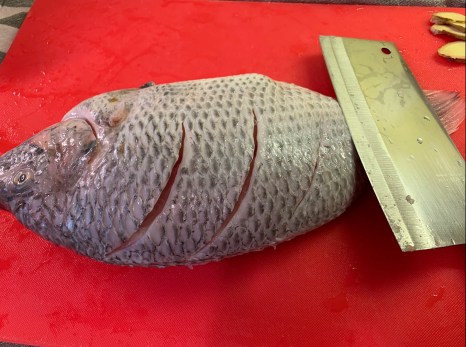
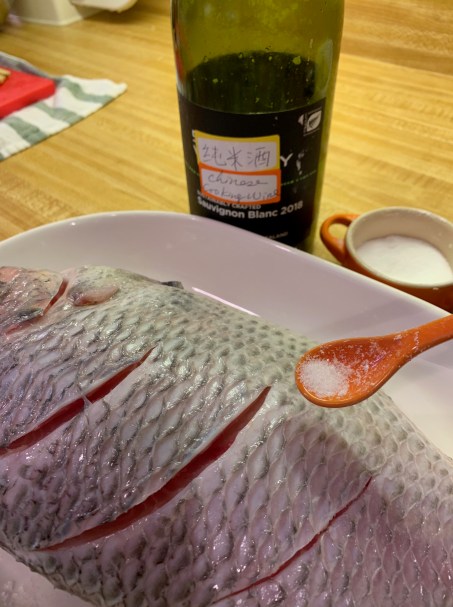
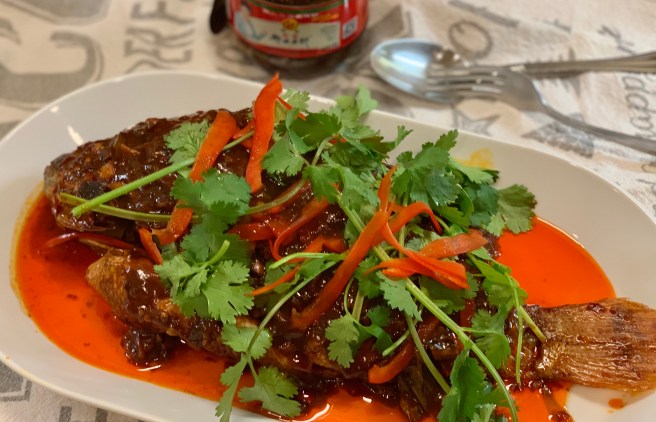 Dry-braising, literally translated from the term gan shao (干烧) in Mandarin, refers to a method in Chinese cooking that uses relatively less braising liquid at the start, and reduces most of the liquid towards the end of cooking. The result? A perfectly braised fish imbued and draped with rich and concentrated sauce. This is a great way to cook any type of fish that has firm and mild-tasting flesh, such as fresh-water-fish tilapia used in this recipe. There are many sauce variations for the fish. But none of them beats this simple yet very satisfying sauce seasoned with Sichuan bean paste, doubanjiang, 豆瓣酱. By quickly stir-frying it in, doubanjiang’s beautiful red brown color and rich complex umami flavours are created and imparted to the golden and crispy Tilapia.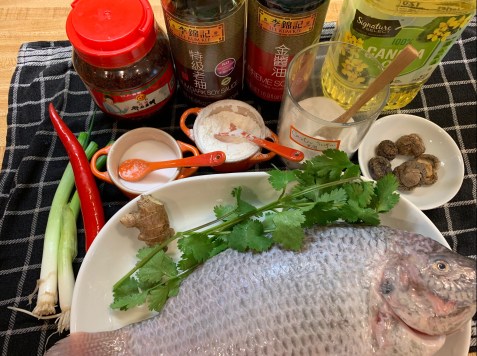


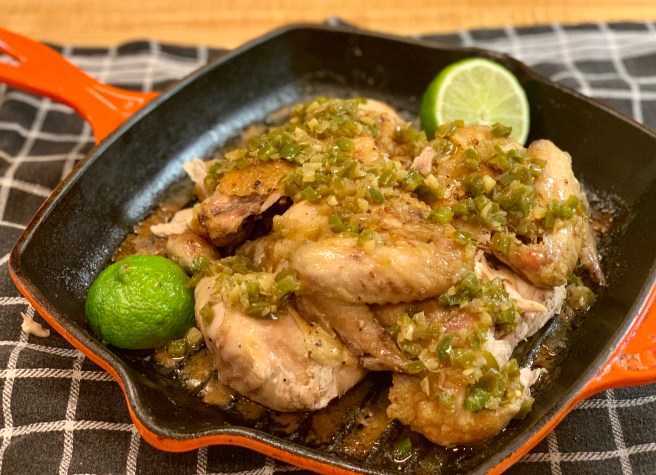 I tried to give this unadorned but deeply flavorful roasted chicken with an Asian touch by using a vibrant sauce of shallots, garlic, jalapeno and soy sauce. The chef Jonathan Waxman created the Italian version at Barbuto, then-Italian restaurant in the West Village, New York City. One important thing I also learned that the magic to this legendary crispy-skinned roast chicken is to baste.


 Opo Squash, or “Chinese Long Squash’ or 瓠子hù zǐ, is a native Chinese and Southeast Asian squash similar to a zucchini. Belonging to the gourd family, it has pale green skin, white flesh and very mild flavor. The humble vegetable is a great source of fiber and provides rich vitamins and minerals. It can be seasoned with a variety of items, and generally absorbs the flavors of other ingredients when it is used in a stir-fry, soup or stew.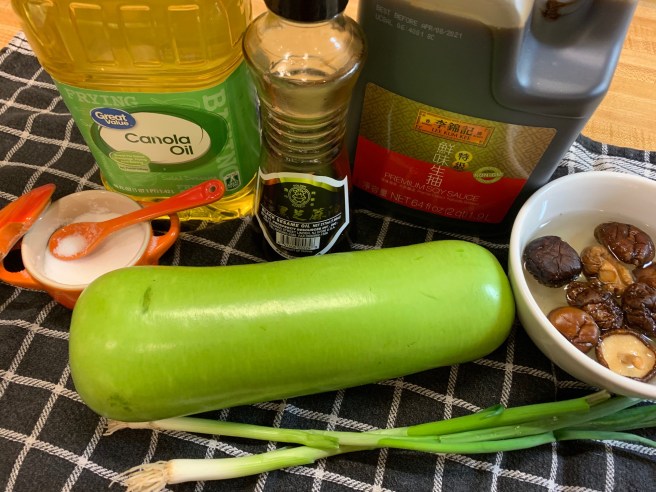


 lets-playdough.com